
Last updated November 2, 2026
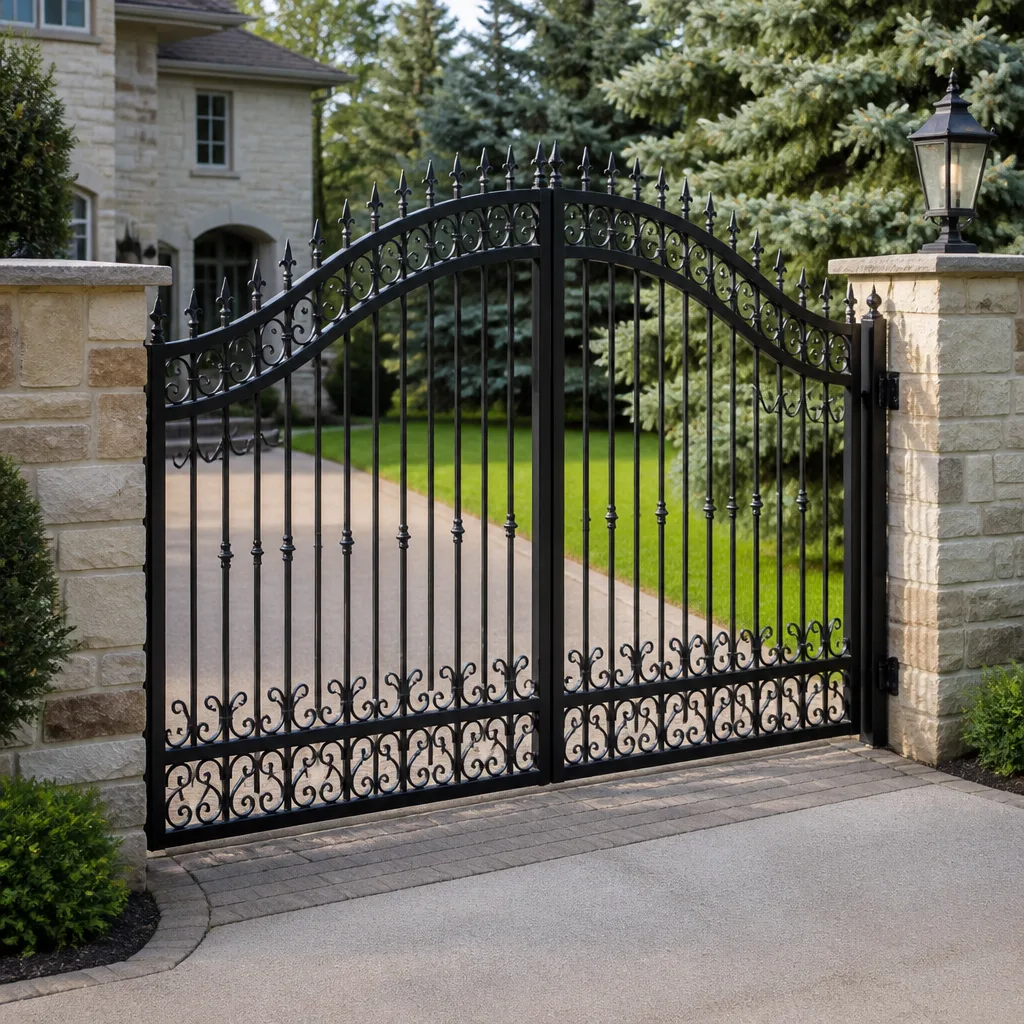 Wrought iron
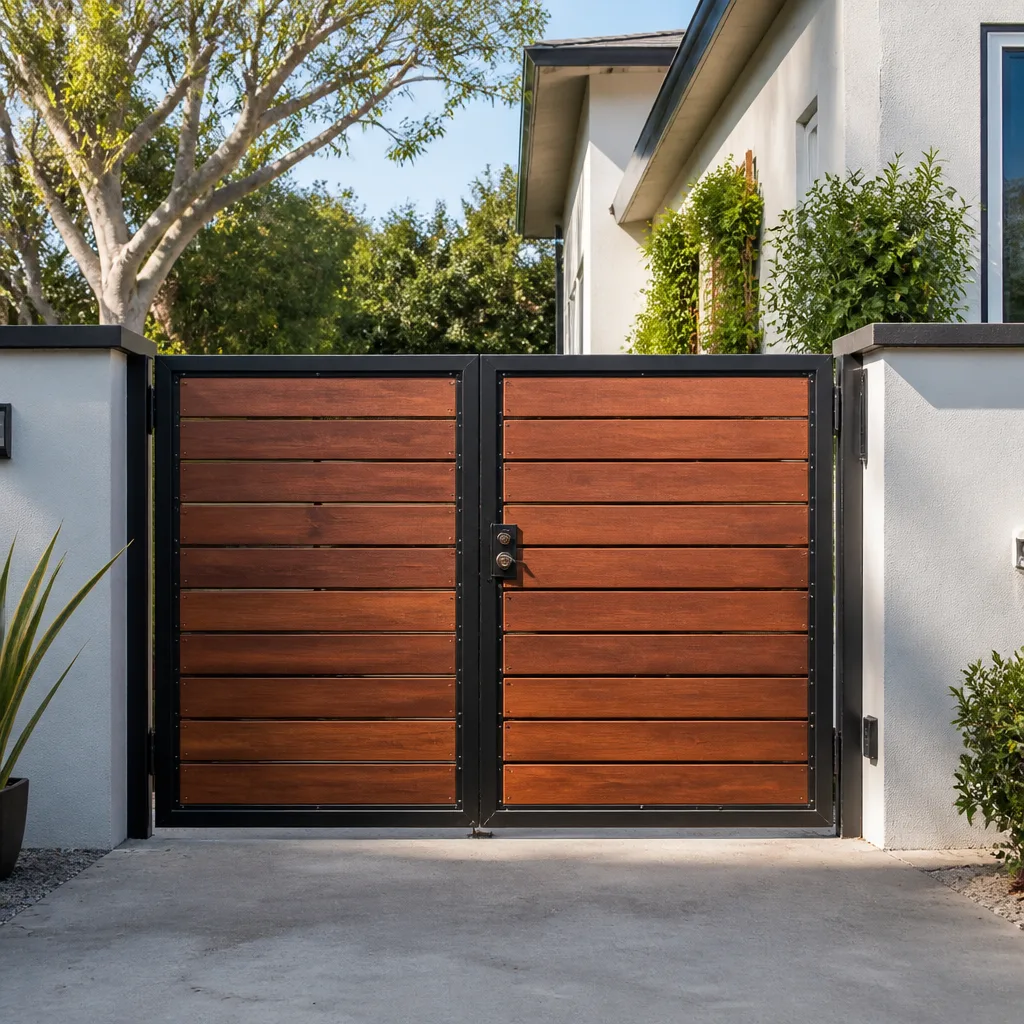 Wood & steel frame
 Farm & ranch
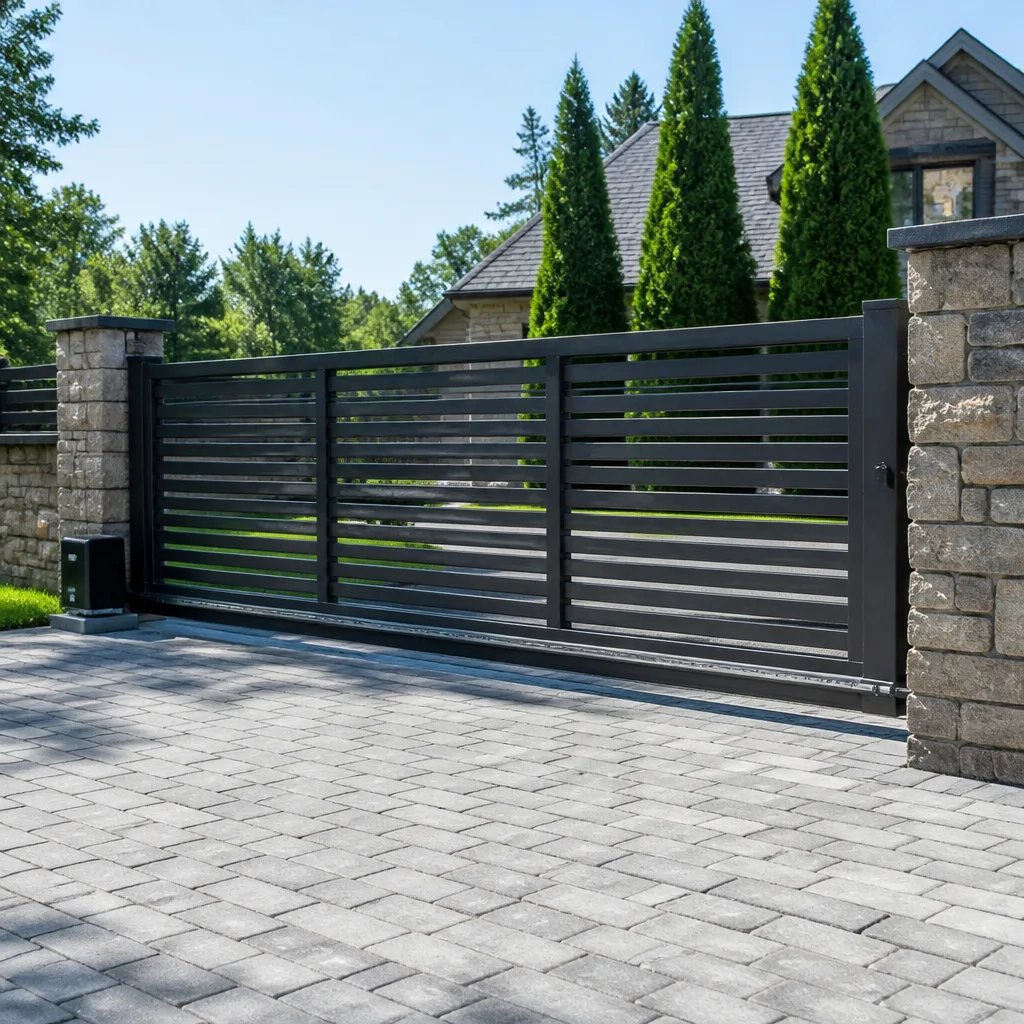 Sliding driveway gates
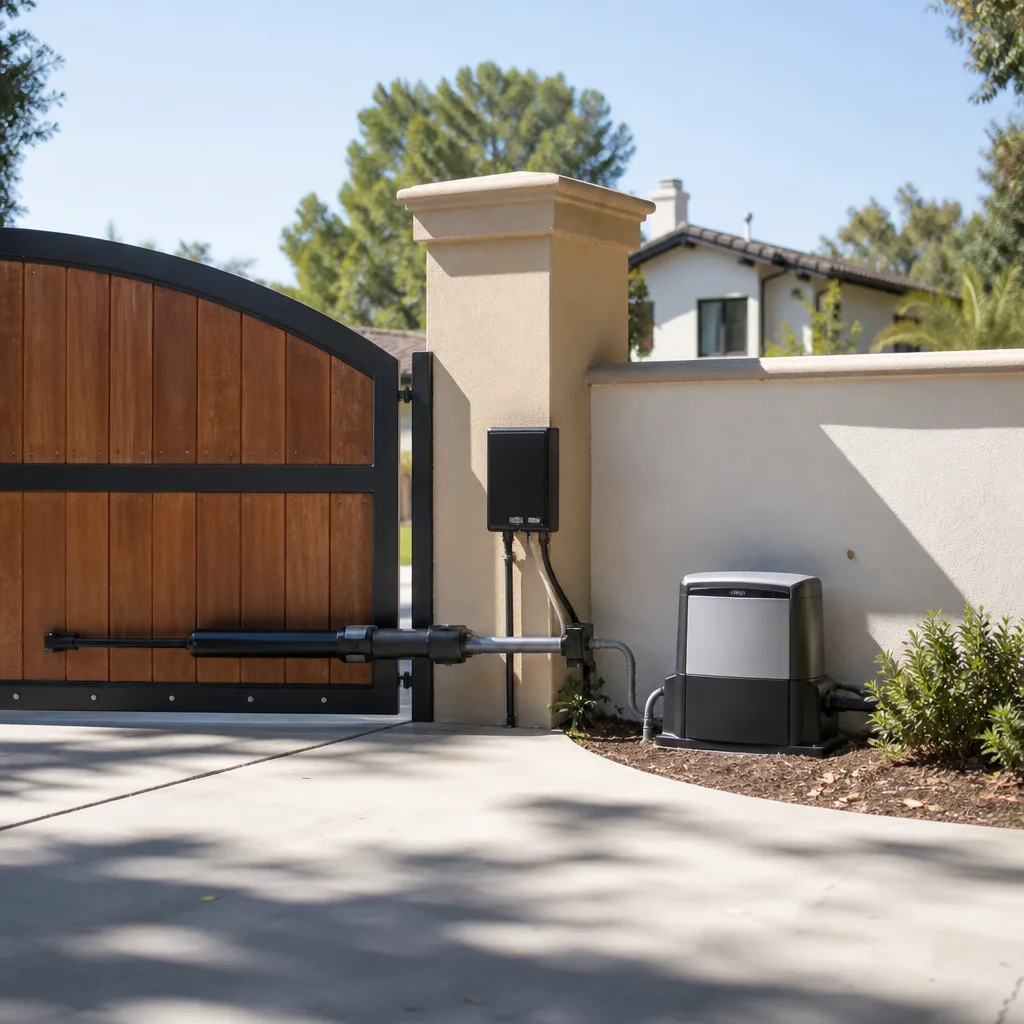 LiftMaster operators
Free on-site gate assessment - hinges, posts, and your LiftMaster or Nice gate operator checked before anything is quoted
The assessment is free and the quote is the invoice.
Get your free estimateGate Repair Emergency Preparedness Guide for Almaden Homes
Most Almaden homeowners don’t think about their gate until it stops working, and by then the problem has already decided what kind of day they’re going to have. A gate that won’t open at 7 a.m. on a school day isn’t the same emergency as a gate that won’t close at 11 p.m. after you’ve already turned in for the night. This guide walks you through both failure modes, the three conditions that cause almost every gate emergency, and the specific steps to take before you call for service. Our goal is simple: by the time you finish reading, you’ll know whether you can resolve the problem yourself in under five minutes or whether you need a gate repair specialist in Almaden on the phone.
Styles & brands we work with
- Wrought iron
- Wood & steel frame
- Farm & ranch
- Sliding driveway gates
- LiftMaster operators
Quick Answer
Gate emergencies in Almaden break into two categories: access failures (gate stuck closed, can’t get in or out) and security failures (gate stuck open, property exposed). Access failures are usually solved first by finding and using the manual release on your operator, then by checking the photo eyes and power source. Security failures require immediate temporary measures to block the opening, plus a call to a specialist who can diagnose whether the problem is electrical, mechanical, or control-board related.
Table of Contents
- The Two Kinds of Gate Emergencies: Security vs. Access Failure
- How to Locate and Use the Manual Release on Four Common Residential Operators
- What to Do When the Power Goes Out and Your Gate Is Electric
- Security Protocol: Your Gate Is Stuck Open and Won’t Close
- Access Protocol: Your Gate Is Stuck Closed and You Can’t Get Through
- What to Do When the Gate Won’t Stop Moving
- What Information to Have Ready Before You Call for Emergency Gate Service
- Common Mistakes to Avoid
- When to Call a Professional
- Frequently Asked Questions
- The Bottom Line
The Two Kinds of Gate Emergencies: Security vs. Access Failure
Every gate emergency we’ve responded to in Almaden fits into one of two buckets, and knowing which bucket you’re in changes what you should do in the first five minutes.
A security failure means the gate is stuck in the open position. The immediate problem isn’t inconvenience; it’s exposure. Your driveway is open to the street, which means your vehicles, your packages, and in some cases your entry doors are visible and accessible. In neighborhoods like Almaden Valley and Country Club, where homes sit on larger lots with longer driveways, an open gate effectively removes the first layer of your property’s security. A security failure becomes urgent after dark, but even during the day it’s worth addressing quickly.
An access failure means the gate is stuck closed and you can’t move your vehicle in or out. This is the more common emergency call we get in Almaden, simply because the failure is felt immediately, usually at the worst possible time. You’re trying to leave for work, or you’re arriving home with groceries, and the gate won’t budge. If your property has a pedestrian gate, it’s an inconvenience. If the driveway gate is the only way in or out, it’s a trap.
The response to each type of failure is different enough that knowing the distinction should be part of every homeowner’s basic knowledge. The sections below walk through both, in the order most homeowners encounter them.
How to Locate and Use the Manual Release on Four Common Residential Operators
If your gate is electric and it’s dead in the closed position, the first thing to check is the manual release. Every automatic gate operator sold in the U.S. for residential use has one. It’s a mechanical bypass that disconnects the gate from the operator so you can push or pull the gate by hand. Here’s where to find it on four brands we see regularly in Almaden:
LiftMaster
LiftMaster swing and slide gate operators use a release mechanism that’s typically located on the top or face of the operator housing. For residential swing gate models like the LA400 or LA500, you’ll find a red or yellow release handle near the operator arm. Pull it toward you or rotate it a quarter-turn, and the gate should swing free. For slide gate models, the release is usually a chain or lift handle on the side of the operator. The key thing with LiftMaster is that the release handle is color-coded: red or yellow, never painted to match the housing.
FAAC
FAAC hydraulic operators, which are more common on higher-end Almaden properties, use a manual release valve or lever that’s built into the operator piston housing. You’ll see a small hexagonal or square knob on the side of the cylinder. Turning it counterclockwise (usually one full turn) releases the hydraulic pressure and lets the gate move manually. FAAC operators don’t always make a visible “click” when you release them, so push the gate gently after one turn to test whether it’s free.
BFT
BFT operators use a release key or lever that varies by model. On the popular BFT Deimos and Phobos lines, the release is a small lever near where the operator arm connects to the gate. Some BFT models include a keyed lock cylinder, and the release key is attached to the operator housing or tucked into a small holder nearby. If you can’t find the key, check the operator’s top surface; BFT often molds a small storage slot into the housing itself.
Linear
Linear swing gate operators use a straightforward pull-pin or lever release. On the Linear OSCO line and the residential Linear LRA series, you’ll look for a metal pin or handle that pulls straight out or rotates upward. Linear tends to place the release at the pivot point where the operator arm meets the gate bracket. Pull firmly; the pin may be tight if the gate has been under load.
A note worth repeating for every brand: the manual release exists precisely so that you are never actually locked in or locked out by a dead operator. The trick is finding it. In our experience, most Almaden homeowners have never once used their manual release, and the first time they need it is the middle of a storm or a 7 a.m. departure. Take five minutes this weekend, walk out to your operator, and locate the release now. You’ll be glad you did.
What to Do When the Power Goes Out and Your Gate Is Electric
Power outages are common enough in Almaden, especially during winter storm cycles when lines come down in the hills above the valley, that every electric gate owner should know what happens when the grid goes down. The short version: your gate isn’t broken, and it probably doesn’t need a repair. But you do need to know how to operate it manually.
Most residential gate operators run on 110V or 220V AC power from your main panel. When that power fails, the operator stops working entirely, which means the gate freezes wherever it was at the moment of the outage. If it was closed, it’s closed. If it was open, it’s open, and it will stay that way until power returns or you release it manually.
Here’s the step-by-step process for handling a power outage:
- Check whether the outage is real. Look at your house lights or your phone for a PG&E outage notification. If the whole block is dark, this is an outage, not a gate fault.
- Use the manual release. Locate the release on your operator (see the section above) and disengage it. Now your gate moves by hand.
- Move the gate to the position you want. For security, close it. For egress, open it enough to get your vehicle through, then close it again if you can.
- Re-engage the release only if you want the operator to take over once power returns. If the gate is in the closed position and you re-engage, the operator will resume normal function when power returns. If you leave it disengaged, the gate will move freely by hand and the operator won’t try to drive it, which avoids any chance of the operator cycling unexpectedly when power is restored.
- Check the battery backup, if you have one. Some higher-end installations in Almaden include a battery backup that keeps the operator functioning through short outages. If your operator has a battery and it’s dead, the failure mode is the same as a power outage; replace or recharge the battery before relying on it again.
One more thing worth knowing: if your gate operator was mid-cycle when the power went out and the gate is sitting halfway, do not try to force it closed or open against the operator. Disengage first, then move it. Forcing the gate against a connected operator can bend the arm, strip the gear, or damage the mounting bracket, and that turns a power outage into an actual repair call.
Security Protocol: Your Gate Is Stuck Open and Won’t Close
A gate stuck open is a different kind of emergency than a gate stuck closed, and in some ways it’s the more serious of the two. You’re not inconvenienced; you’re exposed. Here’s what to do in the first 30 minutes, in order:
- Secure the opening. If you have a pair of gates, try to pull one side closed manually. If it’s a single swing or slide gate, position a vehicle across the driveway opening if you have one available. The goal is to make it visually and physically obvious that the driveway isn’t open access. In Almaden, where properties in the Country Club area and along the hillsides have long sight lines from the street, an open gate is an invitation.
- Do not repeatedly press the remote or keypad. If the operator is in an error state, repeated commands can overheat the motor or trip the control board. Press once. If the gate doesn’t move, stop pressing.
- Check the photo eyes. On most automated gates, photo eyes (the small sensors on either side of the gate opening, near ground level) will block closing if their beam is interrupted or misaligned. Look for debris, a shifted post, or a spider web across the lens. Wipe the lenses clean and try once more. In our experience in Almaden, this single step resolves a surprising number of “gate won’t close” calls without any parts needed.
- Check the loop detector, if you have one. Many driveway gates in Almaden use in-ground loop detectors to sense vehicle presence. If a metal object (a trash can, a bike, a tool box) is sitting on the loop, the gate will read it as a vehicle and refuse to close. Move anything metallic off the driveway approach and try again.
- If the gate still won’t close, leave it secured as best you can and call. A gate stuck open at night is worth an emergency call. During the day, you have more flexibility, but don’t leave the property unsecured for multiple days while you debate it.
One more consideration for security failures: if your gate integrates with a home security system or smart home hub, check whether the system registered the gate position. Some systems will alert you if the gate has been open longer than a set threshold. If yours didn’t alert you, take a moment to review its settings once the gate is repaired. The fix you’re glad you made at 2 p.m. on a Tuesday is the one that would have caught a 2 a.m. stuck-open gate a month later.
Access Protocol: Your Gate Is Stuck Closed and You Can’t Get Through
The most common emergency call we get from Almaden homeowners is the gate that won’t open. Someone’s late for work, someone’s trying to get a delivery, or someone just discovered the gate has been dead for hours. Here’s the sequence of steps, from fastest to most involved:
- Try the backup access method. If you normally use a remote, try the keypad. If the keypad doesn’t work, try the intercom or the app on your phone. Sometimes only one access method fails, and the failure tells you a lot about what’s wrong. A dead remote with a working keypad points to a battery or transmitter issue. A totally dead keypad and remote together points to the operator or control board.
- Use the manual release. This is the step most homeowners skip because they’ve never located the release. Go to your operator, find the release (see the section above), and disengage it. The gate will now move by hand. This doesn’t fix the problem, but it gets your car in or out, and it removes the time pressure from the rest of the troubleshooting.
- Check the breaker. Gate operators are typically on a dedicated circuit. Look for a tripped breaker in your main panel. If the breaker is tripped, reset it once. If it trips again immediately, stop and call; you have a short.
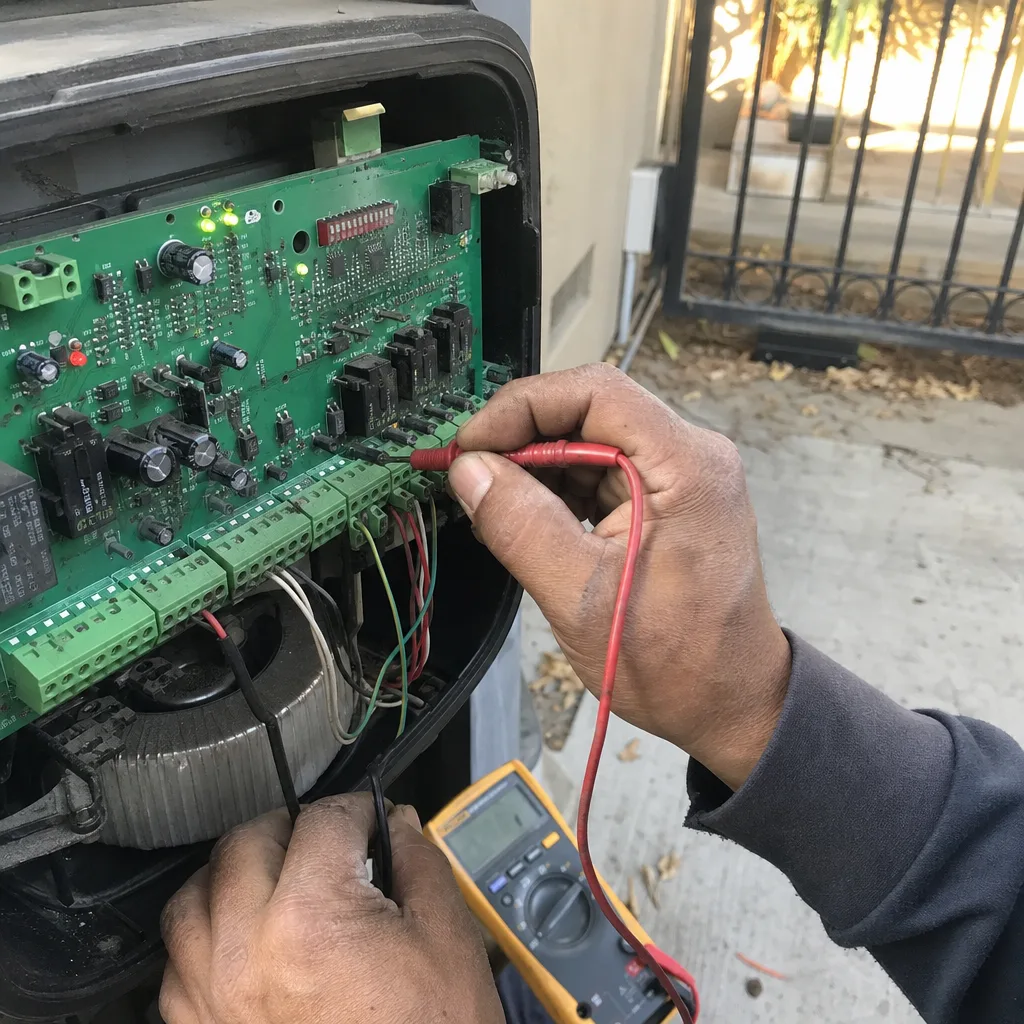
- Look at the indicator lights on the control board. Most operators have a small board with LEDs that flash in specific patterns to indicate faults. LiftMaster, FAAC, BFT, and Linear all use diagnostic LEDs. If you can read the pattern, you’ll know immediately whether the problem is a photo eye alignment, a motor fault, or a power issue.
- If the gate moves a little and then stops or reverses, check the track or hinges. A physical obstruction or a bent roller can cause the gate to bind, and the operator’s obstacle detection will cut power to protect the motor. Look for leaves, dirt, or a shifted gate leaf.
If none of these steps gets the gate open, or if the gate opens but the operator is clearly struggling, you’re likely looking at an operator failure or a control board fault. That’s the point to call for electric gate repair in Almaden.
What to Do When the Gate Won’t Stop Moving
A gate that won’t stop moving is the rarest kind of gate emergency, and it’s the one that requires the most immediate action. Usually the failure looks like this: the gate starts to open or close, hits its limit, and keeps pushing. Or it reverses unpredictably and cycles back and forth. Both symptoms point to a limit switch failure or a control board fault, and both require you to step in before something gets damaged.
Safety warning: a moving gate has more than enough force to injure a person or damage a vehicle. Do not try to stop the gate with your body, and do not reach into the gate’s path while it’s moving. Your goal is to cut power, not to physically intervene.
Here’s the sequence:
- Kill the power at the breaker. Locate the breaker that feeds your gate operator and switch it off. This is the fastest way to stop all movement. Every operator has a dedicated circuit, and the breaker is usually labeled in the main panel. If you can’t find the right breaker, cut power to the whole panel if necessary. The gate stopping is worth the inconvenience of resetting clocks.
- If you can’t reach the breaker, use the manual release. Disengaging the operator from the gate won’t stop the operator itself from running, but it will stop the gate from moving. However, if the arm is extended and the operator is still applying force, the arm can swing unexpectedly when you release it. Stand well clear of the arm’s arc when you pull the release.
- Secure the gate in position. Once the gate is stopped and the operator is disengaged, move the gate to the fully open or fully closed position and secure it. If it’s a slide gate, look for a gate catch or a block. If it’s a swing gate, most installations include some way to pin or chain the leaf in place temporarily. The goal is to prevent the gate from drifting or being pushed by wind while the operator is offline.
- Leave the power off until a specialist arrives. Do not restore power to a gate that wouldn’t stop moving. The fault will still be there, and the gate will likely cycle again the moment power returns. Call an electric gate repair specialist and describe what happened in as much detail as you can. A gate that over-travels is usually a limit switch or control board issue, and it’s repairable, but it needs to be addressed before the operator damages itself or the gate structure.
In our experience, this failure mode is more common on older operators that have been running for years without a limit switch adjustment. Almaden’s heat and dry summer dust don’t do any favors to mechanical limit switches, which can wear or drift out of position. If your gate has been slamming into its stops for a while, that’s the early warning sign of this exact failure.
What Information to Have Ready Before You Call for Emergency Gate Service
When you call for emergency gate service, the dispatcher or technician will ask a short series of questions. Having the answers ready cuts down the time it takes to get a truck to your driveway, and in an emergency, that matters. Here’s what to prepare:
- The brand of your operator. LiftMaster, FAAC, BFT, and Linear are the four we see most often in Almaden, but any brand name helps. If you don’t know the brand, look for a nameplate on the operator housing or the control box. The brand determines which parts the technician brings on the first visit, which in turn determines whether you get a same-visit fix or a second appointment.
- What the gate is doing. Stuck open, stuck closed, moving erratically, making noise but not moving, or completely dead. Be as specific as you can. “It hums but doesn’t move” is a different diagnosis than “it’s completely dead.”
- What you’ve already tried. If you’ve used the manual release, checked the breaker, or cleaned the photo eyes, say so. It saves time and helps the dispatcher understand the level of troubleshooting you’ve already done.
- When the problem started. Did it just happen, or has the gate been acting up for a few days and finally failed? Intermittent issues that become constant have different causes than sudden failures.
- Any recent changes. A power outage, a storm, landscape work near the gate, a new remote, or a vehicle that hit the gate. All of these are relevant context.
- Whether the gate is in the open or closed position right now. This matters for urgency. A gate stuck open at 11 p.m. is an immediate security issue. A gate stuck closed during the day is less time-sensitive, though no less inconvenient.
- Your address and gate location. Almaden has some eccentricities: long shared driveways, gates at the bottom of sloped entries, and secondary pedestrian gates at the top of stairs. If there’s anything unusual about how to access your gate, mention it.
One more tip: take a photo of your operator’s nameplate now, before you ever need one. Store it on your phone with your other household reference photos. When you call, you’ll have the brand, model number, and serial number ready to read off. That single step can turn a diagnostic visit into a repair visit on the first trip.
Common Mistakes to Avoid
- Pressing the remote or keypad repeatedly when the gate doesn’t respond. Every press sends a command to the control board. If the board or motor is in an error state, repeated commands can overheat the motor, trigger a thermal shutdown, or drain a backup battery. Press once. If nothing happens, move on to troubleshooting.
- Not knowing where the manual release is. This is the single biggest avoidable cause of extended lockouts in Almaden. The manual release is there for exactly this scenario, and five minutes of familiarization today can save you a service call tomorrow. Walk out and find yours this week.
- Forcing the gate open or closed against a connected operator. If the gate won’t move and the operator is still engaged, forcing it can strip gears, bend the operator arm, or damage the mounting bracket. Disengage first, then move the gate by hand.
- Ignoring early warning signs. If your gate has been slowing down, making new noises, or hesitating before it starts moving, those are warning signs, not quirks. Almaden’s dry heat and dust accelerate wear on mechanical parts. A gate that’s been struggling for two weeks often fails completely at the worst possible time.
- Calling the wrong type of company. Gate systems are a specific trade. A general handyman or a garage door company may be able to do basic mechanical work, but electric gate operators involve control boards, safety sensors, and brand-specific programming that reward specialist knowledge. If your gate is automated, call someone who works on automated gates every day.
- Leaving a stuck-open gate unsecured overnight. We understand that it’s inconvenient, but an open driveway gate in Almaden Valley at midnight is a security gap. Block the opening with a vehicle or secure the gate leaf manually before you go to bed, and schedule the repair the next morning.
- Not testing the gate after repair. After any repair, run the gate through a full open-close cycle two or three times and verify that it stops properly at both limits, the photo eyes are functioning, and the manual release still works. A repair isn’t complete until you’ve confirmed the gate does everything it’s supposed to do.
When to Call a Professional
Some gate problems are genuinely DIY-able: a blown fuse, a misaligned photo eye, a release handle that needs a firm pull. Others are not. If the manual release doesn’t free your gate, the breaker is fine but the operator is dead, the gate won’t stop moving, or you see visible damage to the operator arm, the control board, or the gate hinges, you’re beyond homeowner territory. Electric gate systems carry enough voltage and enough mechanical force to hurt someone, and the control boards are sensitive to incorrect wiring and improper voltage. At that point, call a gate repair specialist in Almaden who works on your specific brand. Gate Repair Almaden offers free estimates in Almaden, and we work on LiftMaster, FAAC, BFT, and Linear systems every week. Call (833) 620-6313 to talk through what you’re seeing.
Frequently Asked Questions
Every electric gate operator has a manual release mechanism, usually a handle, key, or valve on the operator housing. The location varies by brand: LiftMaster uses a red or yellow handle near the operator arm, FAAC uses a release knob on the hydraulic cylinder, BFT uses a small lever or keyed cylinder, and Linear uses a pull-pin or lever at the pivot point. Locate your release now, before you need it, and you’ll be able to move your gate by hand during any power outage. If you can’t find your release or the gate won’t move after disengaging, call (833) 620-6313 and we’ll walk you through it.
A gate that cycles on its own usually has one of three causes: a photo eye beam that’s being intermittently interrupted by moving branches, shadows, or debris; a loop detector that’s picking up interference from nearby metal; or a control board that’s registering phantom commands from a remote or keypad. Start by cleaning the photo eye lenses and checking for anything moving in the beam path. If the problem persists, the control board may need diagnostic testing by an electric gate repair technician.
A humming operator with no gate movement usually means the motor is getting power but the gate can’t move, either because of a physical obstruction, a worn gear, or a faulty capacitor. Check for anything blocking the gate’s path first. If the path is clear and the operator still hums without moving, stop trying to operate it and call a professional. Running a stalled motor will burn it out quickly, and replacing a motor is more expensive than repairing whatever caused the stall.
Replacing a gate operator involves electrical wiring, safety sensor alignment, and programming that’s specific to each brand and model. While a homeowner with electrical experience can physically mount and wire an operator, the safety systems (photo eyes, edge sensors, force settings) must be calibrated correctly or the gate can be dangerous. If you’re considering a replacement, gate installation in Almaden is something we do every week, and we’re happy to talk through whether a repair or a replacement makes more sense for your system.
Emergency gate repair costs in Almaden vary depending on the problem, the brand of operator, and the parts involved. A photo eye alignment or a breaker reset costs less than a control board replacement, and the brand matters too: FAAC and BFT parts tend to run higher than LiftMaster or Linear parts for comparable components. Every repair we quote includes the price upfront, agreed before any work starts. Call (833) 620-6313 for a specific quote on what you’re seeing.
We do both. If the gate structure is sound and the operator has failed, replacing the operator is usually the right call. If the gate itself is sagging, rusting, or damaged, replacing the operator is putting a new motor on a failing structure, and we’ll tell you that. Gate installation in Almaden covers full new gate systems, and we’ll help you decide whether a repair or a replacement is the smarter long-term move for your property.
The Bottom Line
Gate emergencies in Almaden come in two forms: the gate that won’t open and the gate that won’t close. The first one traps you; the second one exposes you. Both are solvable, and most are solvable faster if you’ve prepared in advance. Know where your manual release is. Know which breaker feeds your operator. Keep your operator’s brand and model number on your phone. When the gate fails, work the problem in order: access method, manual release, breaker, photo eyes, then call. And when you call, call a company that works on gates every day, that knows your brand, and that quotes the price before any work starts. That’s what we do at Gate Repair Almaden.
Written by the team at Gate Repair Almaden, serving Almaden since 2018.
See the difference
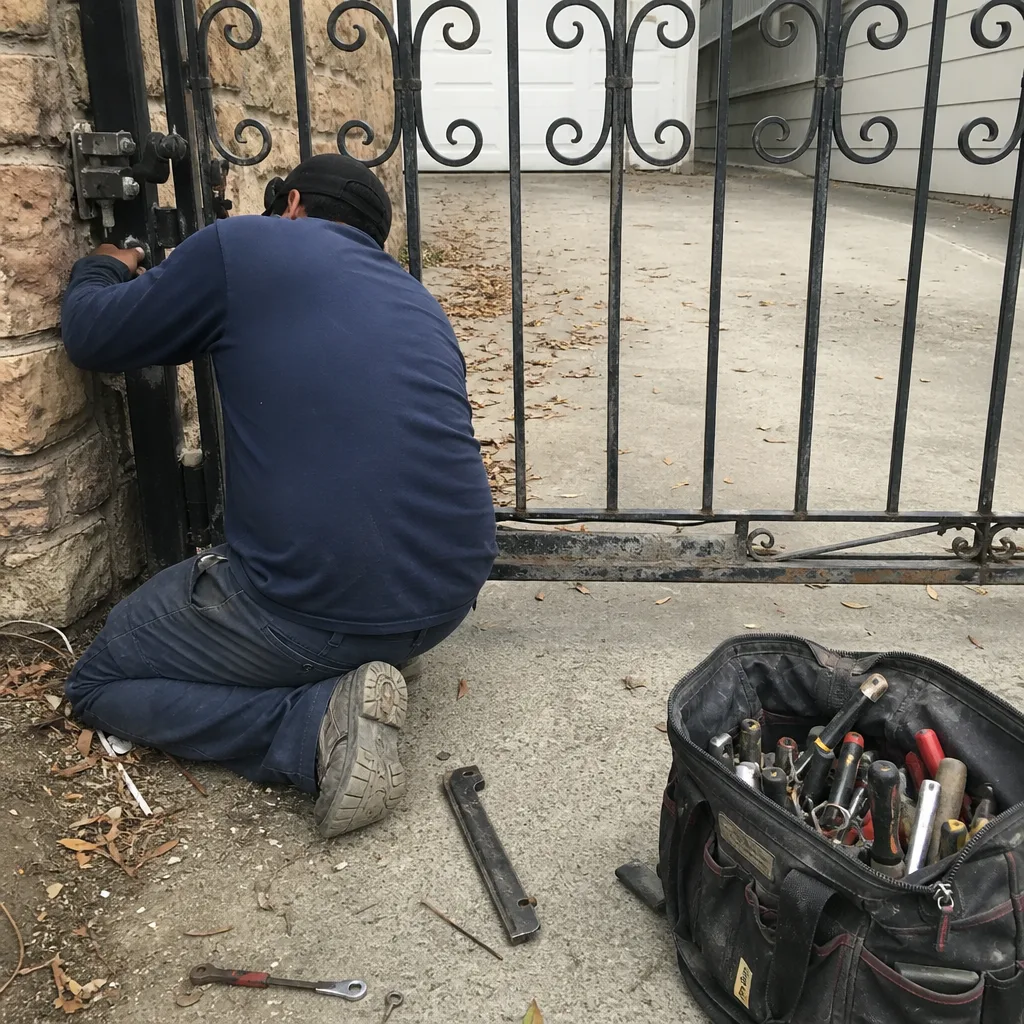 Before
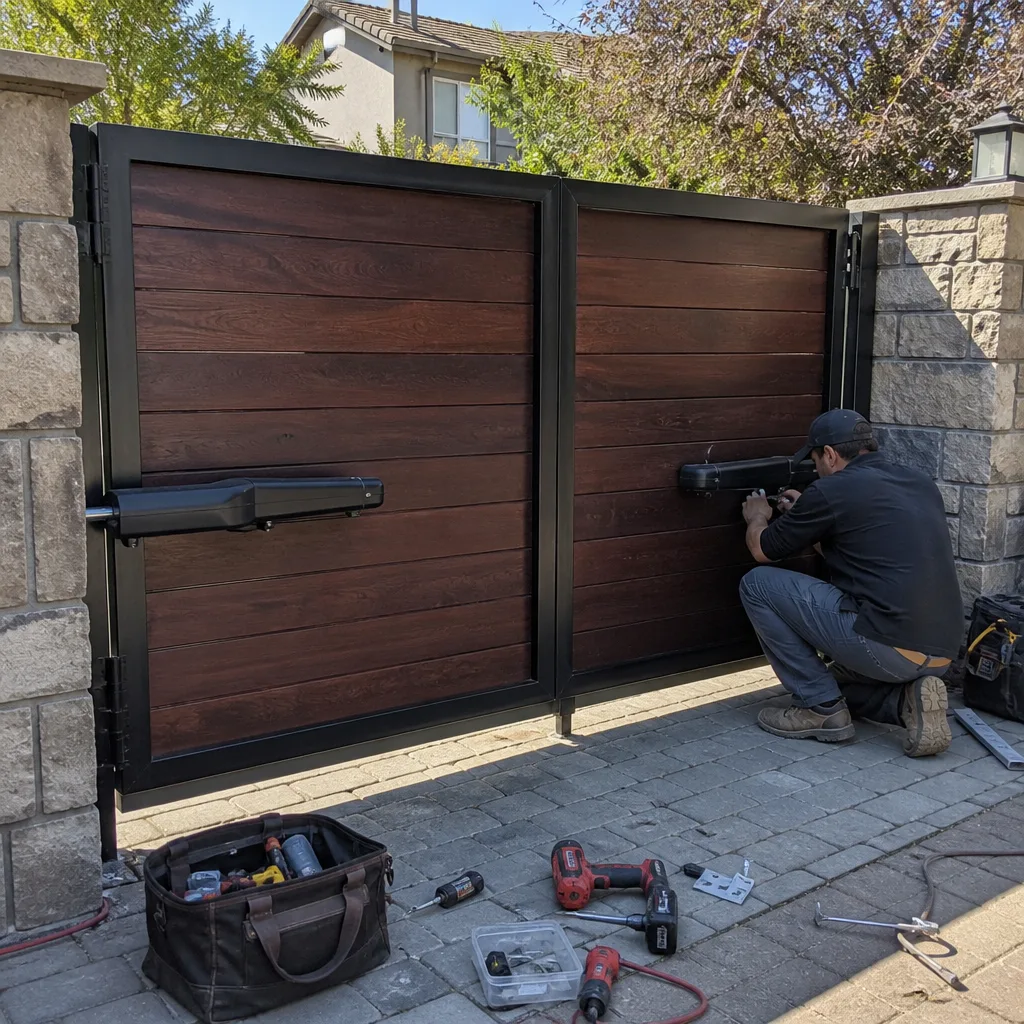 After
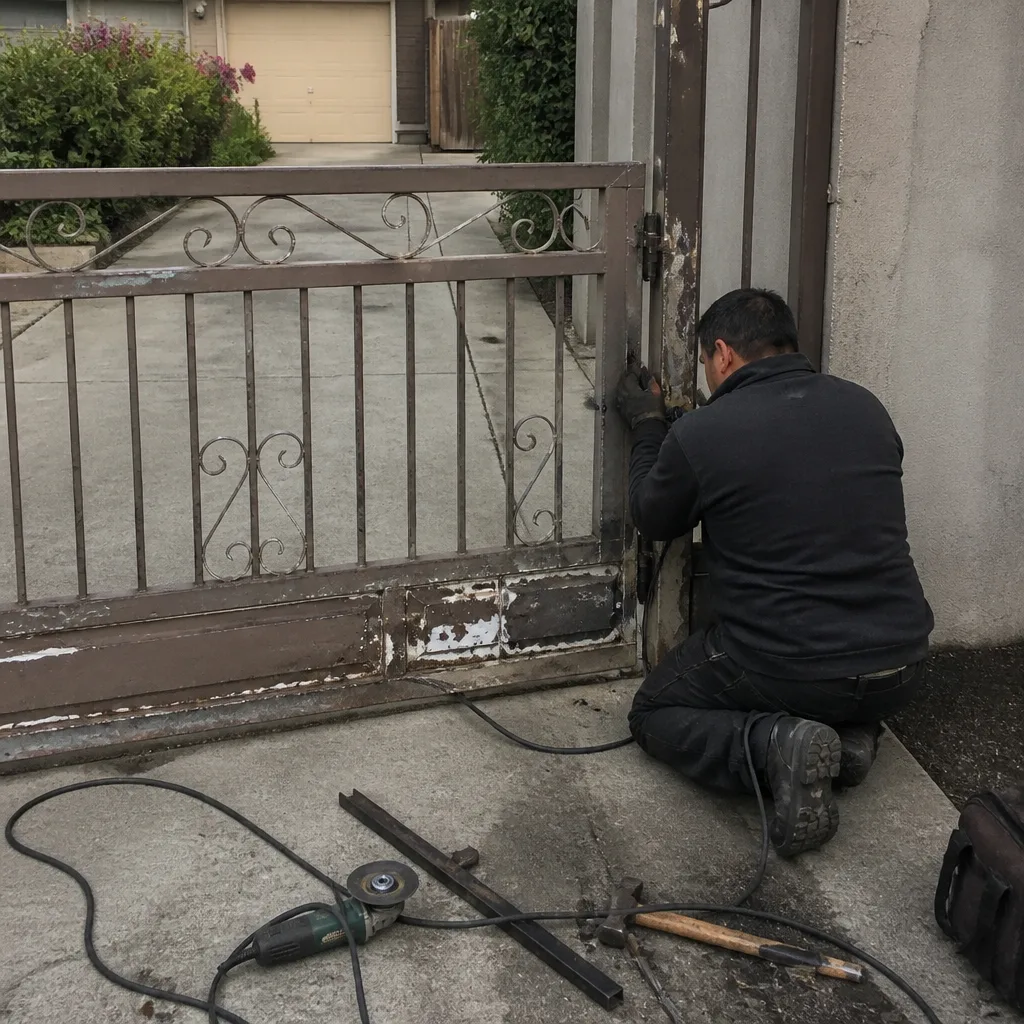 Before
 After
 Before
 After