
Last updated November 2, 2026
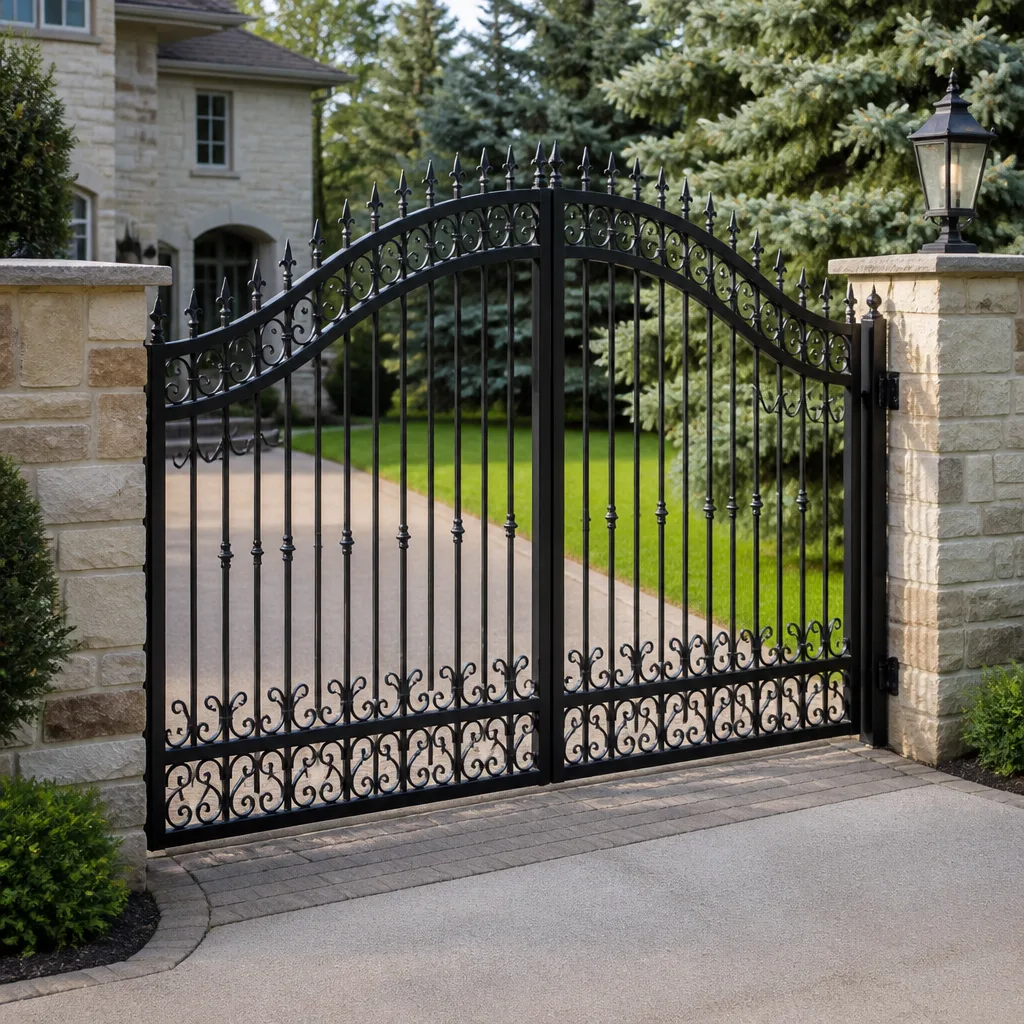 Wrought iron
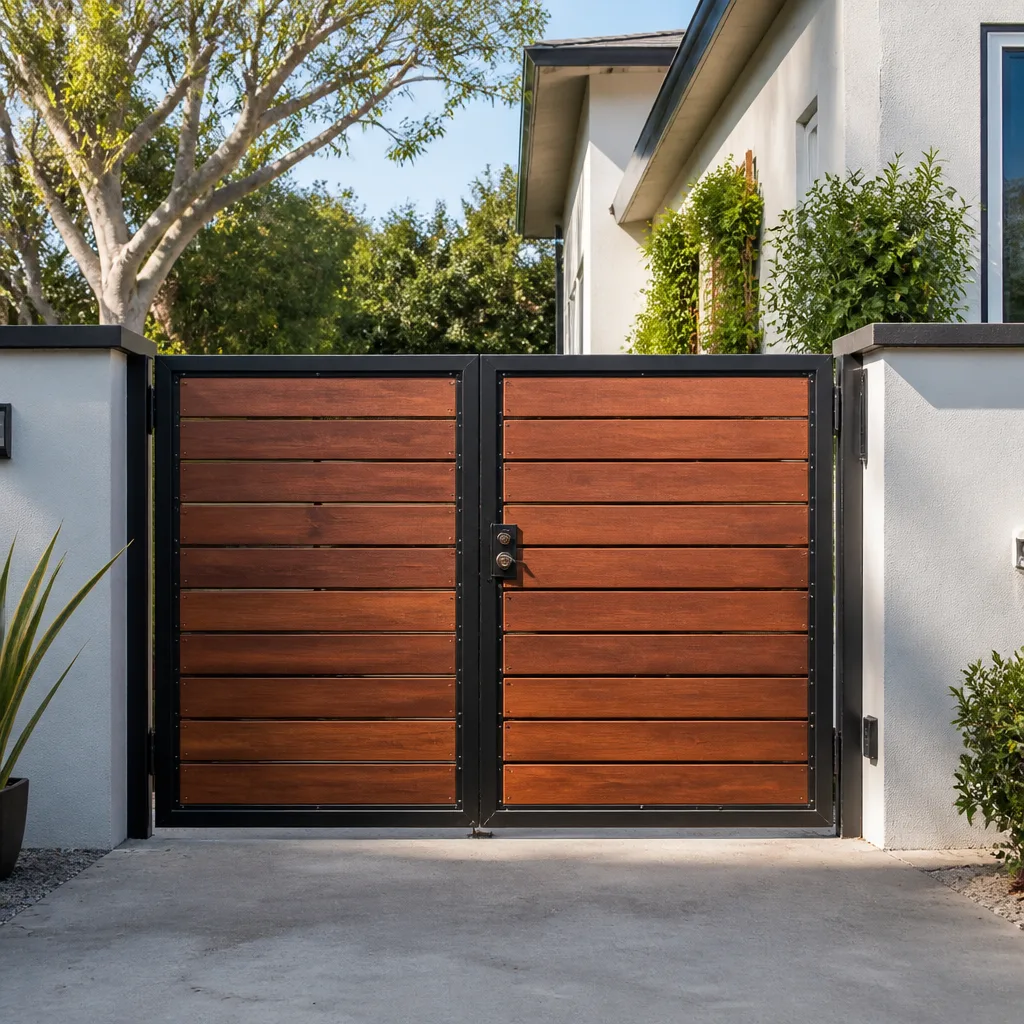 Wood & steel frame
 Farm & ranch
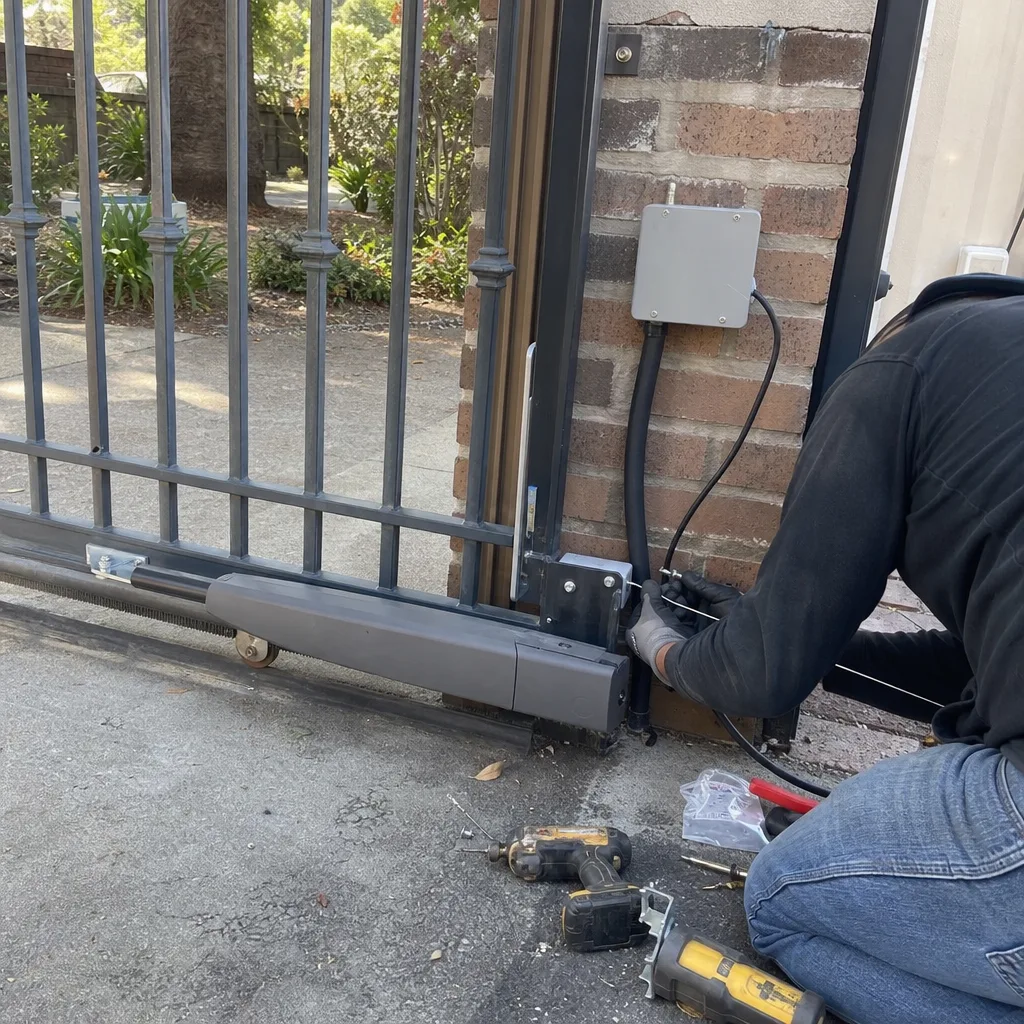
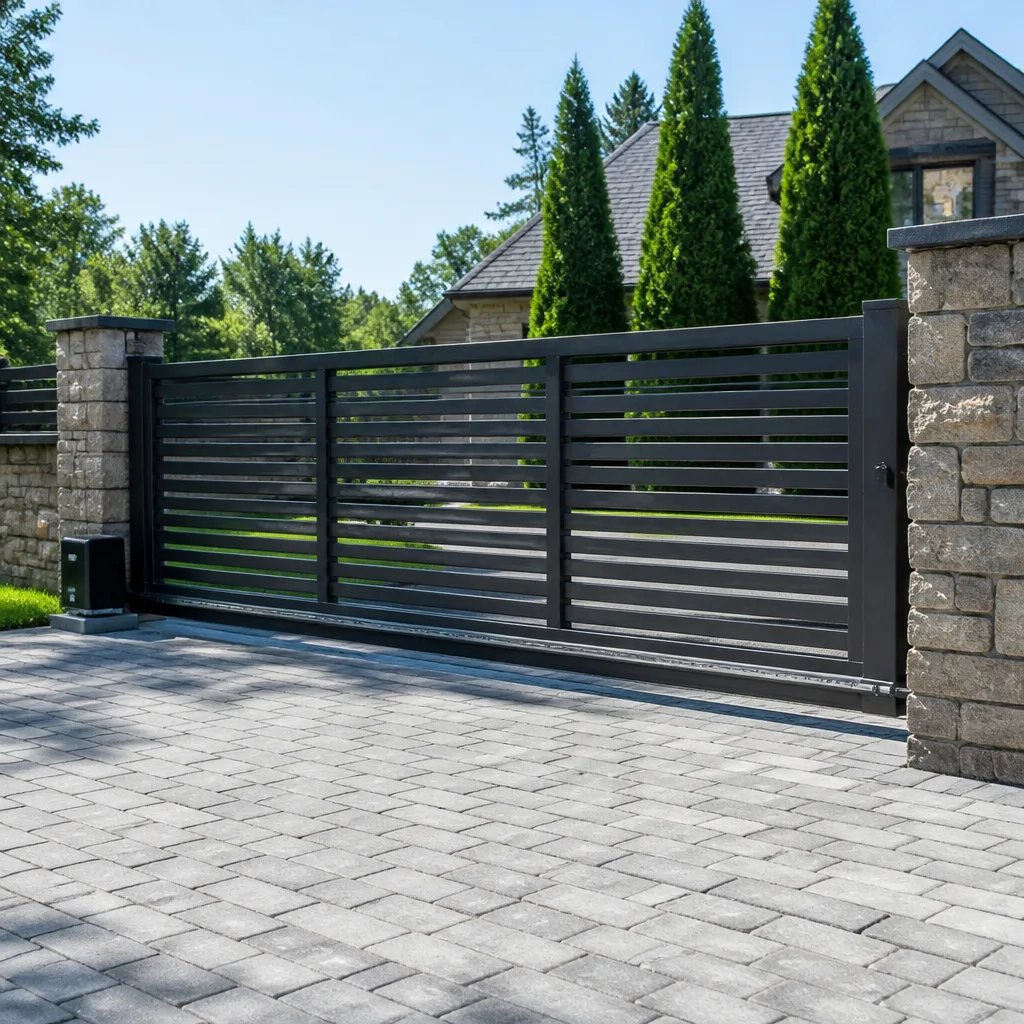 Sliding driveway gates
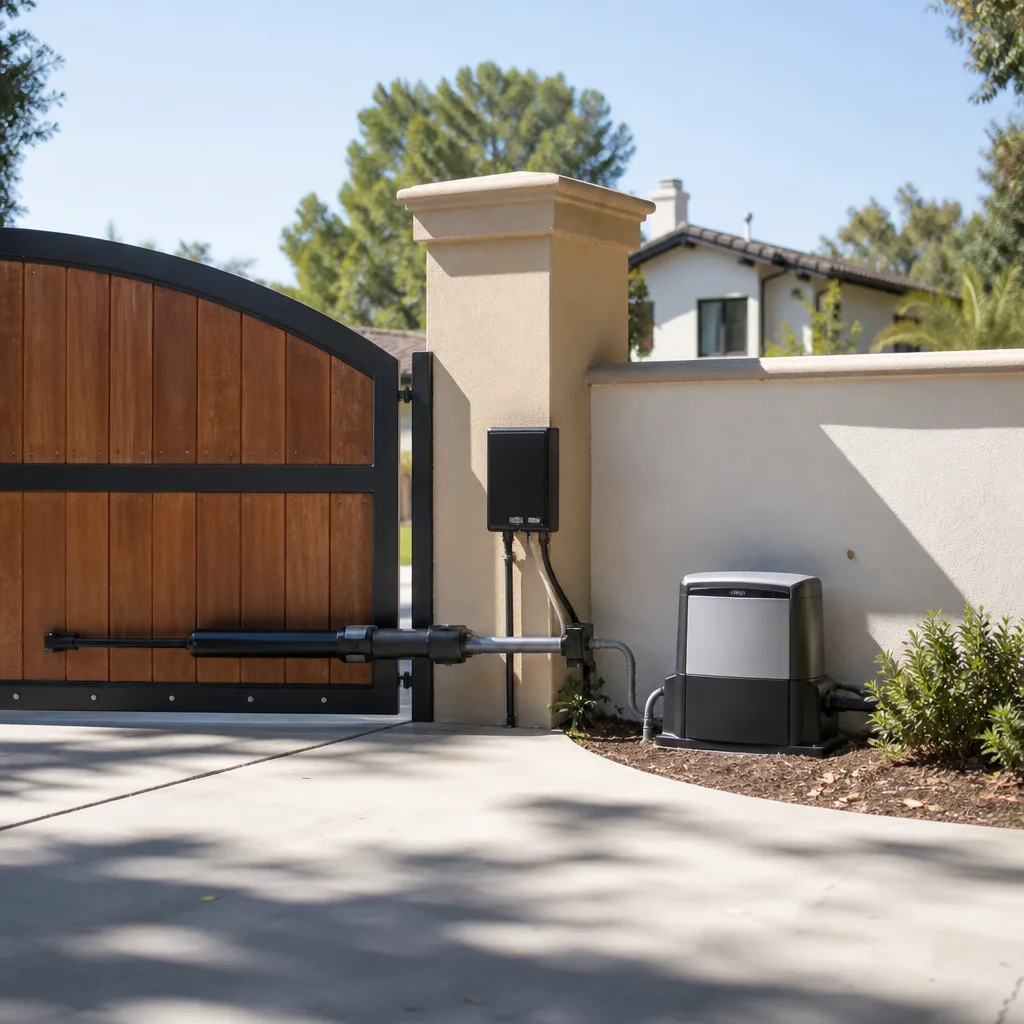 LiftMaster operators
Free on-site gate assessment - hinges, posts, and your LiftMaster or Nice gate operator checked before anything is quoted
The assessment is free and the quote is the invoice.
Get your free estimateThe Complete Gate Repair Guide for Almaden Homeowners
Here’s something that surprises most Almaden homeowners: the majority of “electrical” gate failures we’re called out to diagnose are actually mechanical at the root. A gate that’s begun to drag on its hinges or bind against a shifted post forces the operator motor to work harder on every single cycle. Eventually the motor trips its thermal overload, the control board fries, or the gears strip, and the operator gets blamed for a failure that started quietly at the hinge six months earlier. Our Gate Repair guide walks you through the full anatomy of a residential gate system, the three root causes behind most Almaden gate failures, and how to tell a true repair from a band-aid fix.
Quick Answer
A complete gate repair approach in Almaden means diagnosing four separate subsystems: the structural frame and posts, the mechanical hinges and rollers, the electrical operator and control board, and the access control devices like keypads and photo eyes. Most failures trace back to three root causes: clay-soil post movement, operator overload from a dragging gate, or deferred hinge maintenance. Identifying which subsystem has actually failed, rather than replacing parts at random, determines whether the repair lasts one season or ten years – a topic we explore in depth in DIY vs Professional Gate Repair: The Almaden Homeowner’s Decision Guide.
Styles & brands we work with
- Wrought iron
- Wood & steel frame
- Farm & ranch
- Sliding driveway gates
- LiftMaster operators
Table of Contents
- The Four Subsystems of Every Gate
- The Three Root Causes Behind Most Almaden Gate Failures
- How Almaden’s Clay Soil Kills Gates Slowly
- Operator Overload: When the Motor Is the Victim, Not the Cause
- Hinge Maintenance: The Cheapest Repair You’ll Ever Do
- Seasonal Maintenance for Almaden’s Climate
- Repair or Replace: How to Tell Which Makes Sense
- Documenting Your Gate System Like a Technician
The Four Subsystems of Every Gate
Every residential gate, whether it’s a simple manual swing gate or a fully automated slide gate with an intercom, is built from four distinct subsystems. When one fails, it often takes another down with it. Treating the gate as a single unit is how homeowners end up paying for a new operator when the real problem was a sagging hinge. Here’s how each subsystem works and what it does.
1. The Structural Subsystem: Posts and Frame
The posts are the foundation, literally. In Almaden, where much of the soil is dense clay that expands when wet and shrinks when dry, posts move. A post that leans even two degrees shifts the entire gate leaf out of alignment. The frame, whether steel, wrought iron, aluminum, or wood, hangs its entire weight on the hinges mounted to those posts. Once the structural plane shifts, every other subsystem has to compensate, and they weren’t designed to.
2. The Mechanical Subsystem: Hinges, Rollers, Wheels, and Tracks
This is the part that does the physical work of moving. Swing gates pivot on hinge bearings. Slide gates ride on rollers along a track or cantilever off a set of trucks. Mechanical components wear. Hinge pins develop play. Roller bearings seize. Track sections get bent by vehicles or tree roots. A gate that’s mechanically sound should move with one hand. If it doesn’t, the mechanical subsystem is failing, and the operator will be next.
3. The Electrical Subsystem: Operator, Control Board, and Sensors
The operator is the motor and gearbox that moves the gate. The control board is its brain, interpreting inputs from remote controls, keypads, and external safety devices, then sending power to the motor. Photo eyes, safety edges, and loop detectors are the sensory organs that prevent the gate from closing on a person, car, or pet. When a homeowner says “the gate won’t open,” the electrical subsystem is usually where the symptom shows up first, but it’s often downstream of a mechanical or structural issue.
4. The Access Control Subsystem: Keypads, Intercoms, and Remotes
This is the human interface layer. Keypads, card readers, intercom panels, telephone entry systems, and handheld remotes all send signals to the control board. When a gate won’t respond to a particular keypad code but works fine from the remote, the failure is isolated to that access control device, not the operator. Too many homeowners replace a perfectly good operator because one keypad died.
Understanding these four subsystems changes how you approach any gate problem. You start asking: which subsystem failed first, and what did it take down with it?
The Three Root Causes Behind Most Almaden Gate Failures
After years of working on gates in this area, we’ve found that nearly every failure can be traced to one of three root causes. Knowing which one you’re dealing with determines the repair, the priority, and the honest answer about whether the fix will last. Here they are, in order of frequency.
Root Cause 1: Soil Shift and Post Lean
Almaden sits in the Santa Clara Valley, where much of the native soil is heavy clay with a high shrink-swell potential. When winter rains arrive, the clay absorbs water and expands. During the long dry season, it contracts. This seasonal cycle slowly works gate posts loose. The result is a post that leans forward, pulling the gate leaf with it and creating a progressive misalignment. The gate starts binding at the latch. Then it drags at the bottom corner. Then the operator starts straining. The fix is resetting or replacing the post in concrete or, for severe cases, adding a new footer, then realigning the gate before it can damage anything else.
Root Cause 2: Operator Overload
Operators are designed to move a specific weight and swing distance under specific conditions. When a gate gets heavier to move because of hinge wear, post lean, or accumulated debris, the operator’s workload rises. The motor draws more amps. More amps means more heat. More heat means thermal overload trips or, eventually, burned-out motor windings. The control board can also fail from repeated overcurrent events. The fix that actually works isn’t installing a bigger operator. It’s restoring the mechanical efficiency of the gate so the existing operator runs within its rated capacity.
Root Cause 3: Deferred Hinge Maintenance
Hinges are the most overlooked component on any gate. They’re hidden, they’re greasy, they don’t beep or flash. But every hinge has a service life. Steel-on-steel bearing surfaces wear. Grease breaks down, hardens, or washes out during wet winters. A hinge with stopped lubrication starts grinding instead of pivoting. The gate gets progressively harder to move, and the operator picks up the slack until it fails. A ten-minute lubrication check every few months prevents a multi-hundred-dollar repair down the line.
If you identify which of these three is driving your gate problem, you’ll know whether you’re looking at a hinge service, a post reset, an operator replacement, or some combination. That’s the difference between a repair that lasts and one that just buys you a few months.
How Almaden’s Clay Soil Kills Gates Slowly
Almaden’s soil is a bigger factor in gate longevity than most homeowners realize. The valley floor around Almaden Valley and the lower foothills contains significant deposits of expansive clay. When this clay gets wet during the winter months, it swells. When it dries out in the summer, it shrinks and cracks. This cycle isn’t dramatic from season to season, but over five or ten years it exerts enormous pressure on anything buried in the ground.
What to Look For Before the Problem Cascades
- A visible gap between the post and the surrounding concrete: As clay shifts, the post’s footing can crack loose. Look for a hairline gap where the post meets its concrete collar.
- A gate that used to close square but now scrapes the latch post: If the gap at the top of the gate is different from the gap at the bottom, the post has moved.
- Concrete that’s cracked in a circle around the post: This is the signature of expansive soil pressure. The footing is being worked from below.
- A gate that self-opens or self-closes: When a post leans even slightly, gravity takes over and the gate drifts.
The Cascade Effect
Here’s the sequence we see repeatedly in Almaden. A post leans three or four degrees. The gate leaf now rests slightly lower at the latch side. The latch no longer aligns cleanly. The homeowner forces the gate, bending the latch hardware. The gate leaf drags at the bottom corner, adding friction. The operator now has to push through that friction on every cycle. Within a year, the operator’s thermal overload starts tripping. The homeowner calls for an operator repair, but the actual fix is the post and the latch. When we assess a failing gate, we always look at the posts before we touch the operator, because in this soil, the post is usually where the story starts.
Gate repair in Almaden often starts with a post and alignment assessment, not an electrical diagnosis, because that’s what the geology demands.
Operator Overload: When the Motor Is the Victim, Not the Cause
Operators from brands like Ghost Controls, DoorKing, and Elite are built to handle years of cycles, but only if the gate they’re operating moves the way it’s supposed to. When a gate gets harder to move, the operator doesn’t complain. It just works harder. Then it fails.
This Is How a Typical Overload Failure Unfolds
- The gate develops mechanical friction. A hinge pin wears, a roller seizes, or a wheel bearing goes dry. The gate now requires more force to move.
- The operator’s amp draw increases. Electric motors draw current proportional to load. A 15% increase in mechanical resistance can mean a 25-30% increase in amp draw.
- Heat builds up. Higher current means more heat in the motor windings and on the control board’s relay contacts.
- Thermal protection trips. If the operator has a thermal overload, it shuts down until it cools. If it doesn’t, the windings or the control board eventually fail permanently.
- The operator is declared dead. But the hinge that started it all is still there, waiting to kill the next operator too.
Mighty Mule operators, which are popular with Almaden homeowners doing DIY installations, are particularly sensitive to this. They’re price-accessible but rated for lighter-duty cycles, so a gate with compromised mechanics shortens their life dramatically. A professionally installed and maintained system can run for a decade or more. The same operator on a binding gate might last two years.
When an operator fails, the first diagnostic step should always be a manual test of the gate. Disconnect the operator linkage, if it has one, and swing or slide the gate by hand. If it doesn’t move smoothly with one hand, the operator was a victim. Replace the operator without fixing the mechanical problem and you’ll be back in the same position within a season.
Our electric gate repair process always starts with this manual test, because electric gate repair in Almaden means fixing the whole system, not just swapping the burned-out part.
Hinge Maintenance: The Cheapest Repair You’ll Ever Do
Hinges are the unsung workhorses of every swing gate. They carry the entire weight of the gate leaf, hundreds of pounds in many cases, while allowing smooth rotation through thousands of cycles per year. Yet most homeowners never lubricate them until something starts squealing, and by then the wear has already happened.
What a Hinge Check Involves
A proper hinge inspection takes ten minutes and requires no specialty tools. Here’s the sequence:
- Look at the hinge pins from the top. If the top of the pin is flush with or sunk into the hinge barrel, the hinge has worn and the pin is seating too deep. A healthy pin should show its head slightly proud of the barrel.
- Lift the gate at the latch end. With the gate closed, grab the latch-side corner and try to lift it. Any vertical movement at all means the hinge bearings or pins are worn. A healthy gate should feel solid with zero play.
- Listen during operation. A smooth gate makes almost no sound. Grinding, squeaking, or creaking means metal is contacting metal without adequate lubrication, and that contact is generating wear particles.
- Check the grease condition. Exposed hinge pins should have visible fresh grease. If the grease is dry, cracked, or absent, the bearing surface is unprotected. In Almaden’s dry summers, grease evaporates and hardens faster than most people expect.
The Lubrication Schedule That Works in This Climate
- Spring (March-April): Apply a heavy-duty lithium or synthetic grease to all hinge pins after the winter rains have had a chance to wash things out. This is the most important lubrication of the year.
- Fall (September-October): Check grease condition again before the wet season. Reapply where it’s thinned or disappeared. Grease that’s contaminated with grit from dry-season dust should be cleaned off and replaced.
- Monthly visual check: While taking out the trash or getting the mail, glance at the hinges. If you see rust streaks, hear noise, or notice the gate sitting differently, address it that week, not next month.
If a hinge is already worn beyond the point where lubrication helps, replacement is the right call. Modern replacement hinges with sealed bearings are available for most gate styles, and upgrading to a sealed bearing hinge eliminates the lubrication issue almost entirely. It’s a modest investment that extends the life of the entire system.
Seasonal Maintenance for Almaden’s Climate
Almaden’s climate is Mediterranean: wet, mild winters and hot, bone-dry summers. That seasonal swing has a distinct effect on every component of a gate system, and maintenance should follow the calendar. Here’s what the seasons demand.
Spring: Post-Winter Recovery
After the winter rains, the clay soil that absorbed water is now slowly drying and shifting again. Spring is the time to check every structural connection. Look for new cracks in post concrete, fresh gaps around footings, and any gate that’s sitting differently than it did in the fall. Reapply grease to hinges and check the drain holes on electrical enclosures for signs of moisture intrusion. Water that got into a control board enclosure during the wet season may not cause immediate failure, but corrosion is already starting.
Summer: Heat and Dust Management
Almaden summers regularly push into the 90s, and direct sun on a metal gate can make the surface hot enough to affect components. Control boards mounted inside metal enclosures absorb that heat. Heat is the enemy of capacitors and relays, the components on your board most likely to fail from thermal stress. Summer is also dust season in Almaden. Dust gets into hinge grease and turns it into an abrasive paste. It clogs operator limit switches and sensor lenses. A quick summer check should focus on keeping things clean and cool. Wipe down solar cells on keypads and intercom panels. Blow out operator enclosures with compressed air if you’re comfortable doing so safely with the power off.
Fall: Pre-Rain Preparation
Before the winter rains arrive, do the most important maintenance of the year. Check every seal and gasket on every electrical enclosure. Make sure photo eye lenses are clean and properly aimed. Confirm that safety edges are intact and not cracked. Check drainage around post footings: water that pools around a post in winter is water that’s working on that post’s foundation. Apply a fresh coat of grease to hinges while the weather is still dry, because grease applied to wet metal can trap moisture rather than repel it.
Winter: Watch and Respond
During the wettest months, keep an eye on how water flows across your driveway or gate area. A gate that sits in a low spot will see more post movement than a gate on high ground. Check for rust bloom on any bare metal, especially at welds and bolt heads. If the gate starts behaving differently after a heavy rain, a post may have moved, and early intervention is far cheaper than waiting for the cascade of failures.
Repair or Replace: How to Tell Which Makes Sense
This is the question every homeowner faces eventually. A repair quote is smaller than a replacement quote, so the short-term math always favors repair. But there’s a cutoff point where repairing an old system stops making financial sense, and knowing where that line sits is the difference between spending wisely and throwing money into a hole.
When Repair Is the Clear Choice
- The structural frame and posts are sound. If the gate leaf is straight, the posts are plumb, and the hinges are in good shape, repairing a failed operator or a dead control board makes complete sense.
- The gate is less than 10 years old and was a quality installation. A well-installed gate from a solid brand still has many years of life left.
- The failure is a single component. A dead keypad, a failed photo eye, a blown capacitor on the control board. These are surgical repairs, not rebuilding projects.
When Replacement Is the Honest Answer
- The posts are leaning or the frame is twisted. If the structural foundation has failed, every repair done on top of it will be undermined. Resetting posts and straightening a frame can cost nearly as much as a new gate.
- The gate has rusted through in multiple places. Wrought iron and steel gates eventually rust from the inside out. Patching one rust hole reveals three more. At some point the gate is beyond economical welding.
- The operator is obsolete. Some older operator brands no longer have parts available. If the board has failed and replacements are unavailable or priced like unobtanium, adapting a new operator to the existing gate is often the smart move. That might mean adapting a Gate Repair Almaden-recommended brand, which is one of the reasons we maintain familiarity with operators from LiftMaster, FAAC, BFT, Linear, Viking, Ghost Controls, DoorKing, Elite, and Mighty Mule. The right part for your exact model, or the right replacement for your exact setup, shortens the whole job.
If you’re on the fence, a professional assessment should tell you honestly which side of the line you’re on. Gate installation in Almaden is one of our core services precisely because sometimes the honest answer is a new gate, not another repair.
Documenting Your Gate System Like a Technician
One of the most useful things you can do for your future self, and for any technician who works on your gate, is to document what you actually have. Most homeowners know they have “an electric gate.” They don’t know the brand, the model, where the control board is, or what type of safety sensors are installed. That missing information adds time to every diagnosis and can lead to wrong parts being ordered.
What to Record
- The operator brand and model. Look for the nameplate on the operator itself. Ghost Controls, DoorKing, Elite, and Mighty Mule are all common in Almaden residential installations. The model number matters even more than the brand.
- The control board part number. Open the operator enclosure, with power off if you’re doing this yourself, and photograph the board where its part number is printed. This number is what determines whether a board can be repaired or replaced.
- The type and placement of every safety device. How many photo eyes? Are they hardwired or wireless? Is there a safety edge on the leading edge of the gate? Where is the loop detector, if you have one?
- The access control inventory. What brand and model is the keypad? The intercom? How many remotes do you have, and what frequency or code type do they use?
- The physical dimensions and material of the gate. Height, width, material, and general condition. If it’s a slide gate, note the track type and wheel configuration.
Do This Once, Save Hours Later
Take photos of everything: the gate from both sides, the post footings, the operator housing, the control board, the keypad, the hinges, the wheels or rollers. Save them in a folder on your phone or computer. Add a text note with the model numbers you could find. Next time something fails, you’ll be able to tell a technician over the phone what you have, and they’ll show up with the right parts on the truck. That’s the difference between a same-visit resolution and a second dispatch. Our gate repair team at Gate Repair Almaden has built its entire parts strategy around this: knowing the exact system before the truck ever leaves the shop.
Common Mistakes to Avoid
- Ignoring a gate that’s getting harder to move. A gate that requires increasing force to open is telling you something. Every week of ignored friction is a week of accelerated wear on the operator. What would have been a $50 hinge service becomes a $700 operator replacement.
- Greasing a hinge that’s already worn out. Grease reduces friction, but it cannot restore metal that’s already been ground away. If the hinge pin has visible play, lubrication is a temporary mask, not a fix. The hinge needs replacement.
- Replacing the operator without checking why the old one failed. This is the most expensive mistake we see in Almaden. A new operator on a binding gate is just the countdown to another burned-out motor.
- Forcing a misaligned latch. When a gate doesn’t latch cleanly, the answer is realignment, not brute force. Bending the latch hardware to “make it work” creates a new set of problems and usually makes the misalignment worse.
- Treating all brands as interchangeable. A DoorKing board doesn’t drop into a Ghost Controls operator. Buying a “universal” replacement part for a brand-specific system usually means adapting, splicing, and compromising. Use the right part for your exact model.
- Skipping the seasonal check. Almaden’s climate cycles will wear your gate whether or not you’re paying attention. Ten minutes of seasonal inspection beats a major repair bill that could have been caught early.
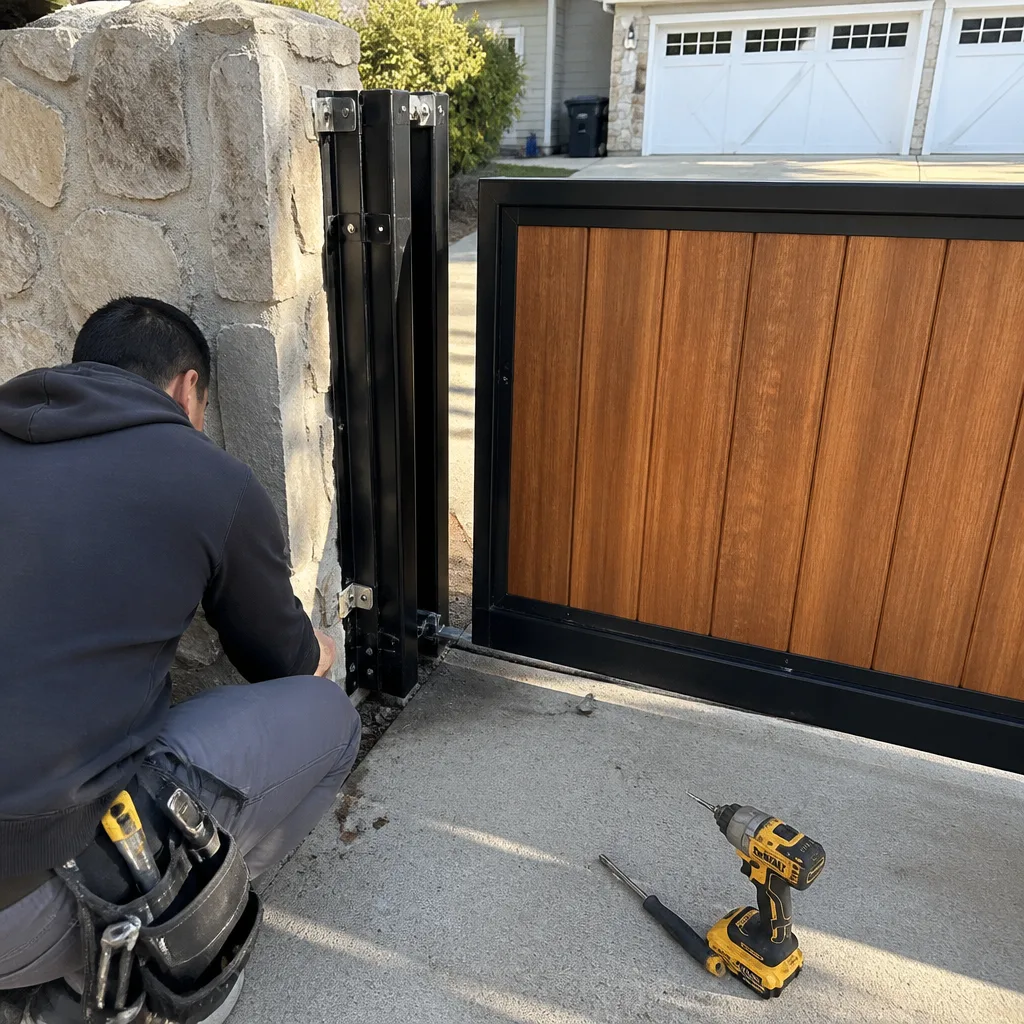
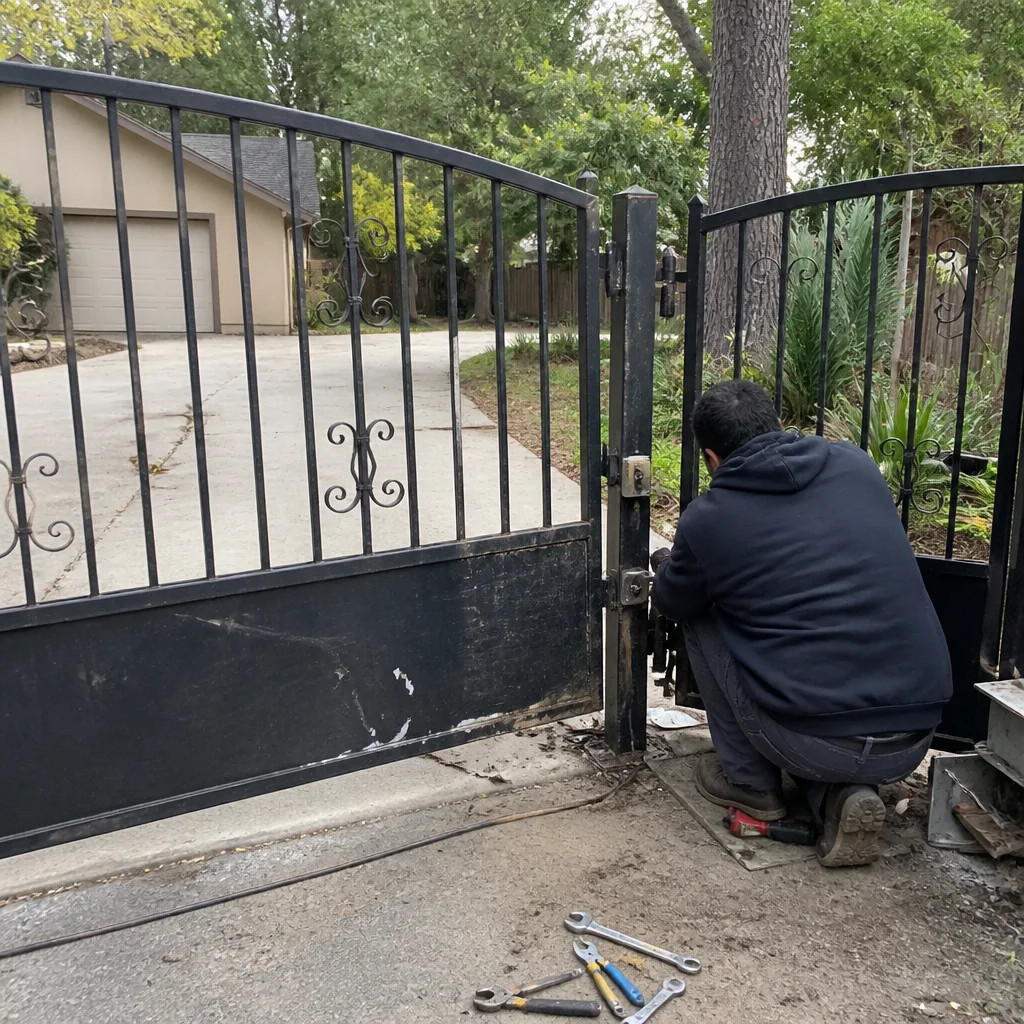
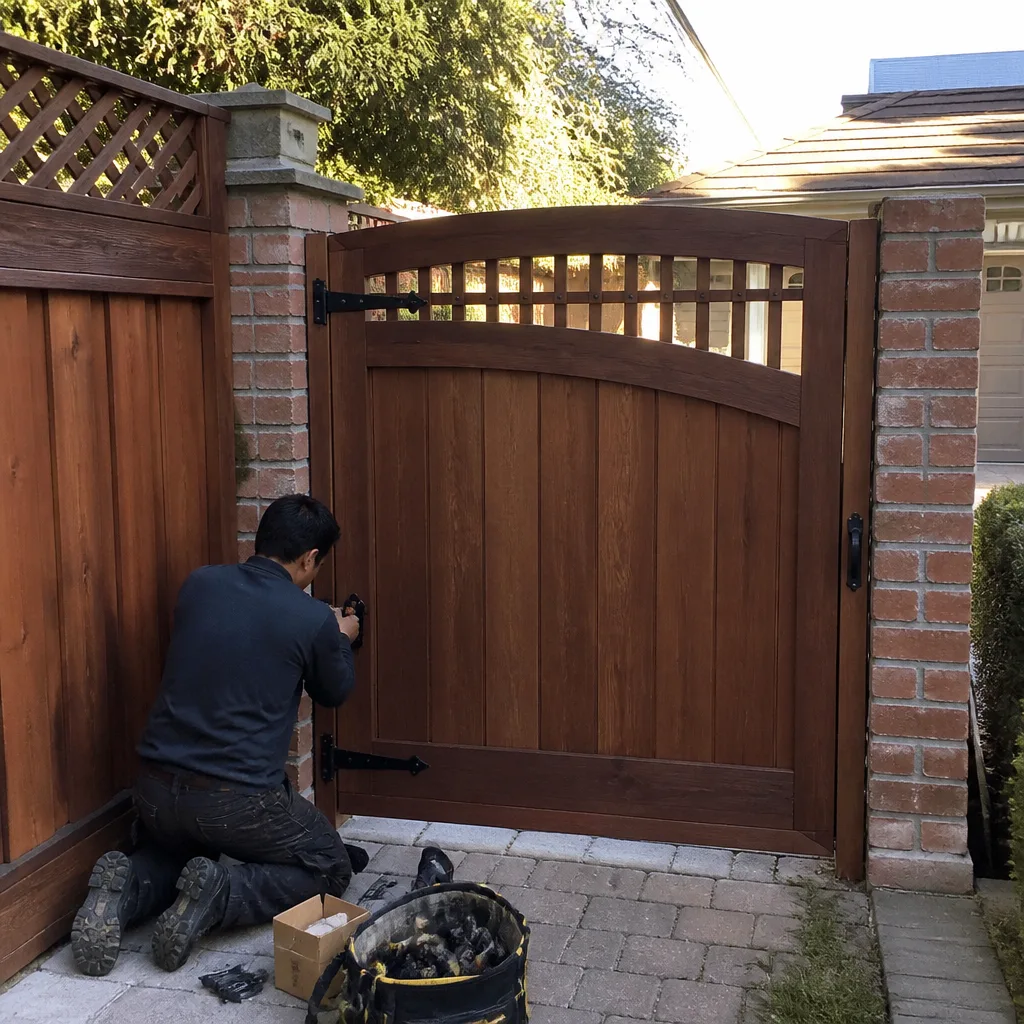
See the difference
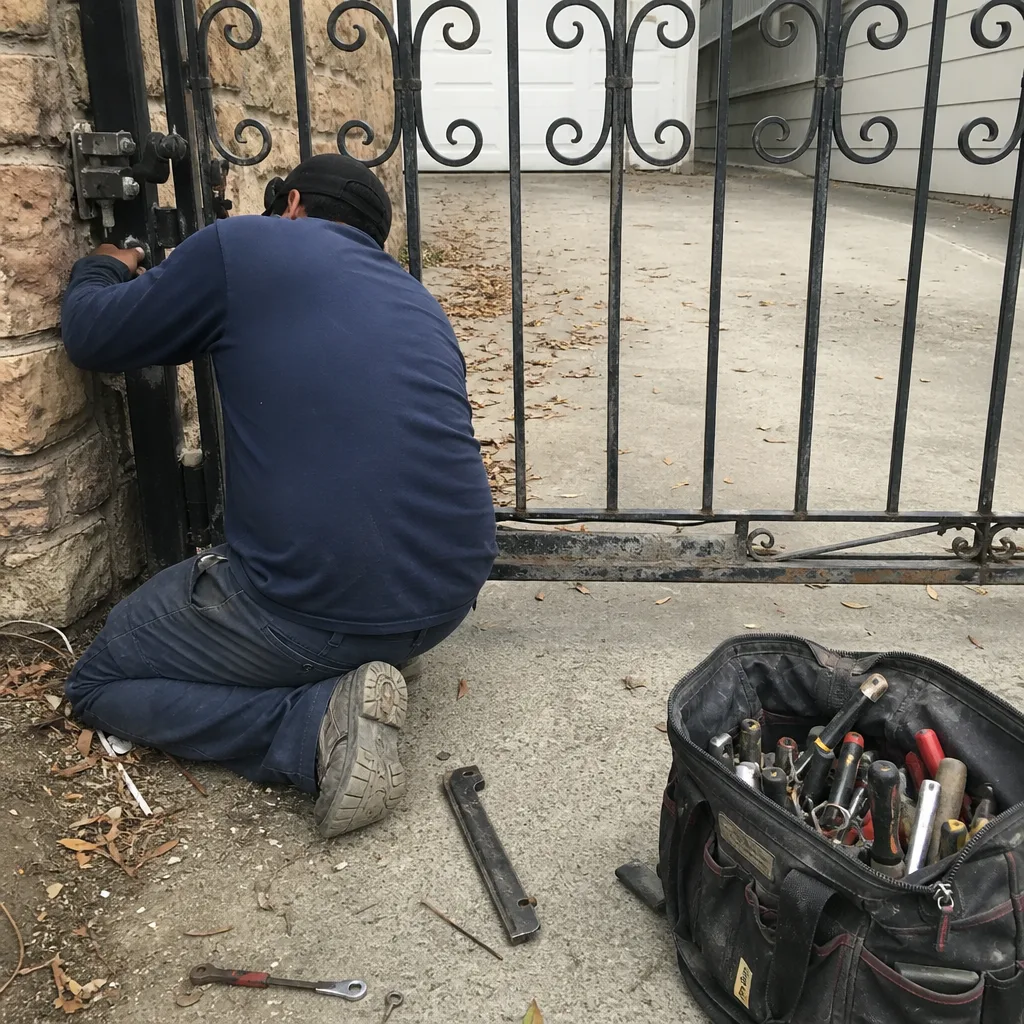 Before
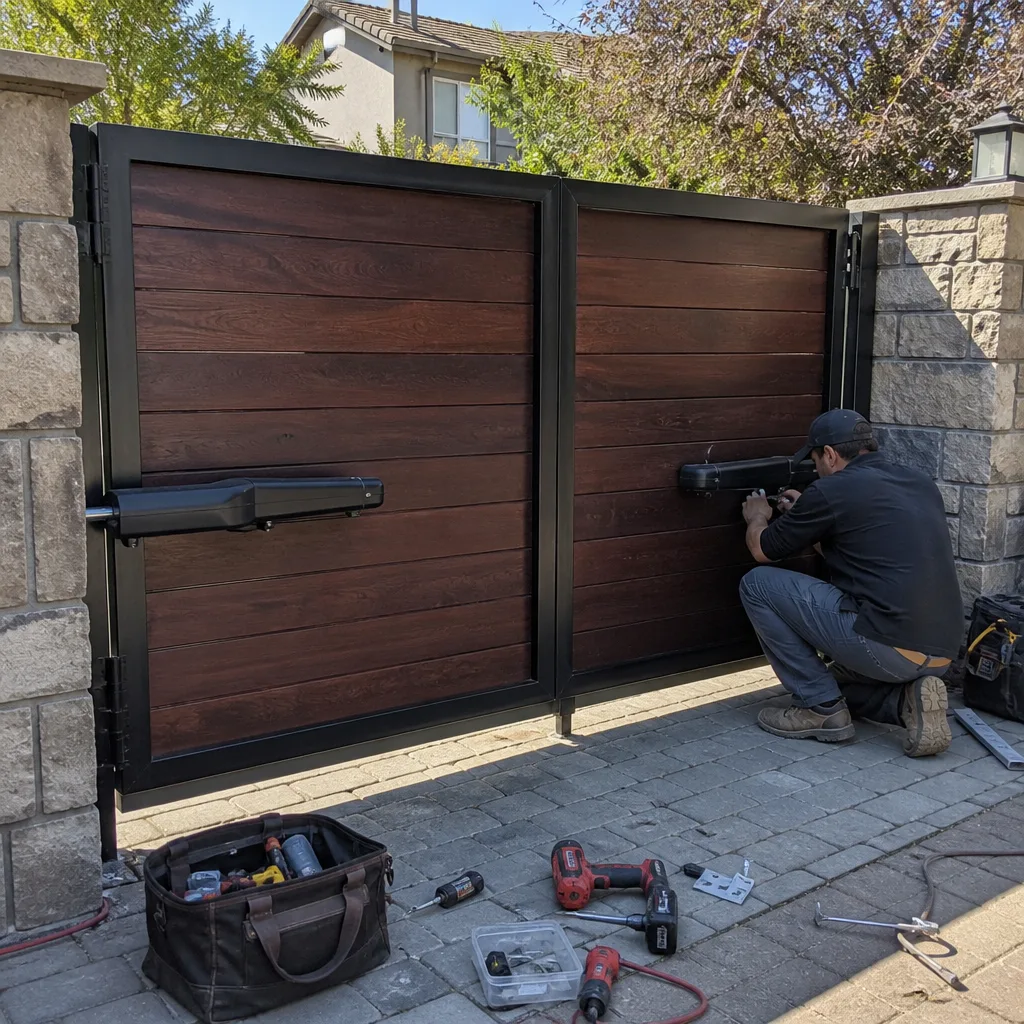 After
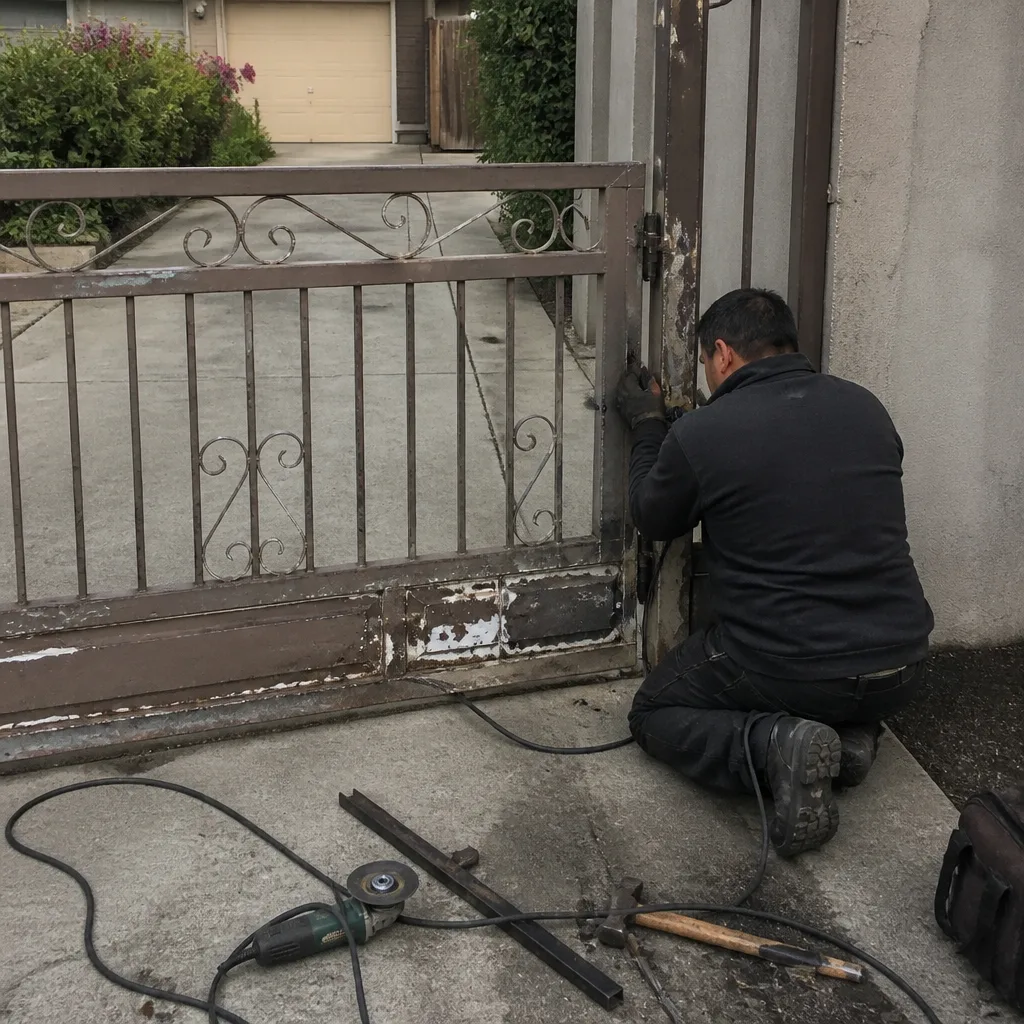 Before
 After
 Before
 After
When to Call a Professional
Some gate problems are safely within a homeowner’s capability: lubricating hinges, checking post alignment, cleaning photo eye lenses, documenting the system. Others aren’t. If you’re dealing with a high-tension spring assembly, a slide gate that has come off its track, or any electrical component inside an operator enclosure, this is work that involves serious stored energy or live wiring. A gate that has jumped its track can weigh several hundred pounds. An operator’s capacitor can hold a charge even with power disconnected. If you’re not certain, call someone who is. Gate Repair Almaden offers free estimates in Almaden, and we diagnose before we quote. Call (833) 620-6313 to schedule an assessment.
Frequently Asked Questions
Gate repair costs in Almaden typically range from $150 for a basic hinge lubrication and adjustment to $400-$900 for operator replacement or control board work, with full post reset jobs running higher. The exact quote depends entirely on which subsystem has failed and what brand and model you have. Call (833) 620-6313 for a free estimate and we’ll tell you the number before any work starts.
For common mechanical failures like hinge replacement or latch realignment, and for many operator faults where the part is on our truck, yes, same-day or next-day service is often possible in Almaden. Emergency situations where a gate is stuck open, leaving your property unsecured, get priority. Call (833) 620-6313 to check current availability.
We work on all major residential and light commercial gate operator brands, with specific training and parts familiarity across LiftMaster, FAAC, BFT, Linear, Viking, Ghost Controls, DoorKing, Elite, and Mighty Mule. That brand-by-brand knowledge is the core of our approach: the right part for your exact model, not a generic workaround.
Not necessarily. A gate that won’t respond to the remote could have a dead remote battery, a failed receiver, a tripped breaker, a blocked photo eye, or an actual operator failure. The fastest diagnostic path is to test the gate with other access methods (keypad, manual release) before concluding the operator is dead. If the keypad works but the remote doesn’t, the problem is in the remote or receiver, not the motor.
A professional inspection and service once a year is the baseline, ideally in the fall before the winter rains arrive. Between annual services, a monthly visual check of hinges, posts, and safety devices catches most problems early. Gates used heavily, like those cycling 20+ times a day, should be serviced twice a year.
If the structure is still sound and the repairs are component-level, the gate may have years of life left. If the frame is rusting through, the posts are moving, or the operator is obsolete with no parts available, replacement is usually the honest financial choice. We’ll tell you which side of that line you’re on, and we install gates too, so one call covers both paths.
The Bottom Line
Almaden’s clay soil, seasonal climate, and the simple reality of metal in motion mean that every gate will eventually need attention. The homeowners who come out ahead are the ones who pay attention early. Check your hinges. Watch your posts. Test your gate by hand before you blame the motor. Document what you have. When something does fail, identify which subsystem is actually at fault before buying parts. And if the diagnosis gets beyond your comfort zone, call a gate specialist or explore our more guides & resources. The money you spend on an accurate diagnosis is the cheapest money in the whole repair.
Need help with your gate in Almaden? Call (833) 620-6313 for a free estimate, or learn more about our gate repair services in Almaden.
Written by the team at Gate Repair Almaden, serving Almaden since 2018.