
Last updated November 2, 2026
 Wrought iron
 Wood & steel frame
 Farm & ranch
 Sliding driveway gates
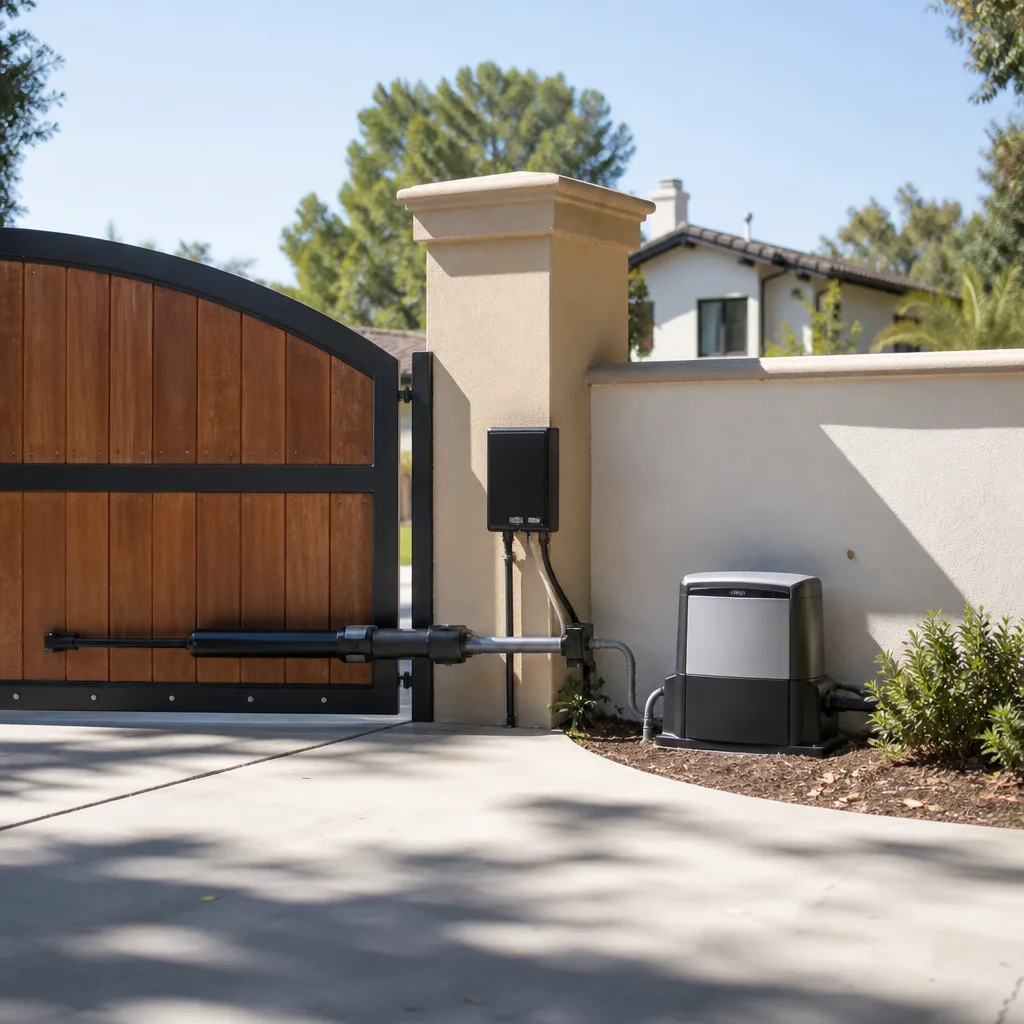 LiftMaster operators
Free on-site gate assessment - hinges, posts, and your LiftMaster or Nice gate operator checked before anything is quoted
The assessment is free and the quote is the invoice.
Get your free estimateGate Repair Warning Signs: An Almaden Homeowner’s Reference Guide
A gate that hesitates for two seconds before moving isn’t being “slow.” It’s showing you that the operator is working near the top of its torque capacity, usually because of a mechanical drag problem that will burn out the motor inside weeks. Almaden homeowners learn this the expensive way: they ignore the hesitation, the motor fails, and a $180 hinge adjustment becomes an $800 operator replacement. This guide categorizes every common gate symptom by urgency level and the component it actually implicates, so you know exactly what you’re looking at, what’s causing it, and whether to act today or plan for next month. We’ve repaired gates throughout Almaden long enough to know that the difference between a minor fix and a major one is usually just time.
Styles & brands we work with
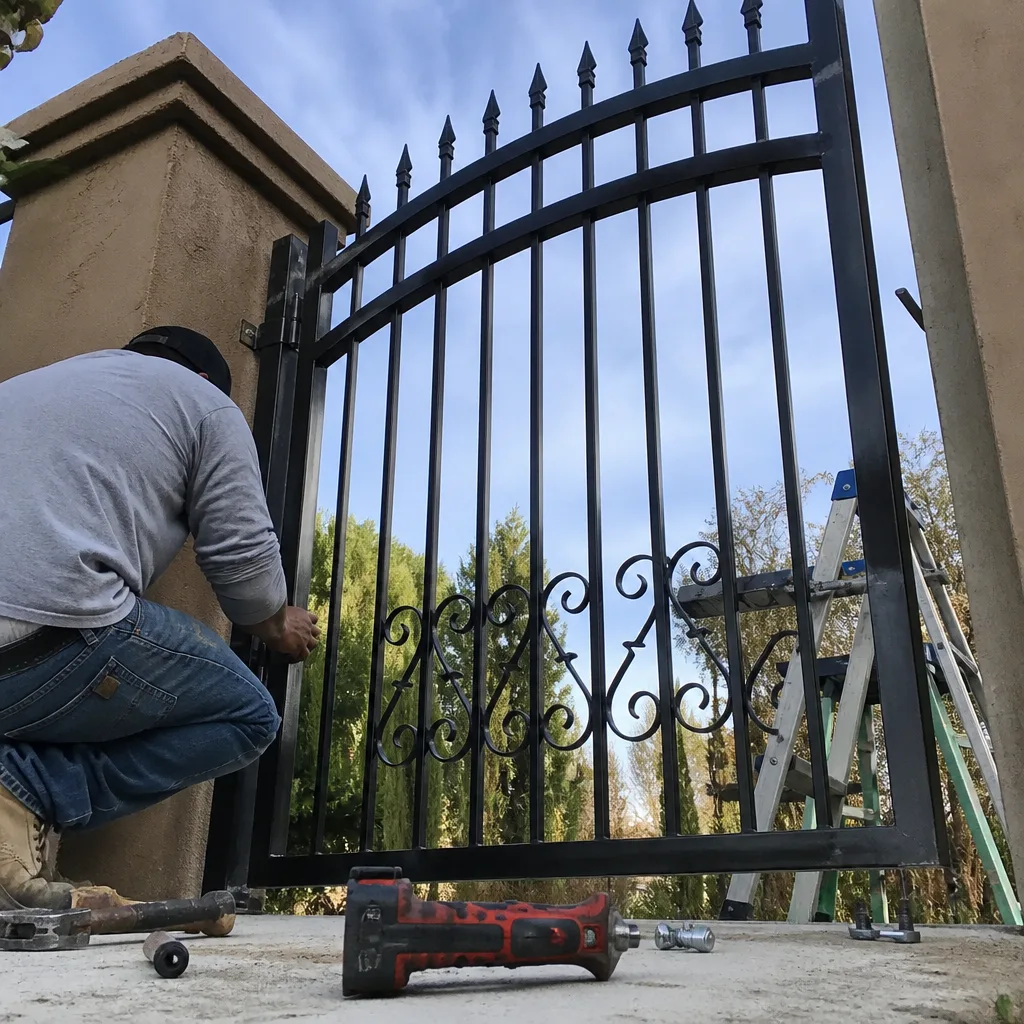
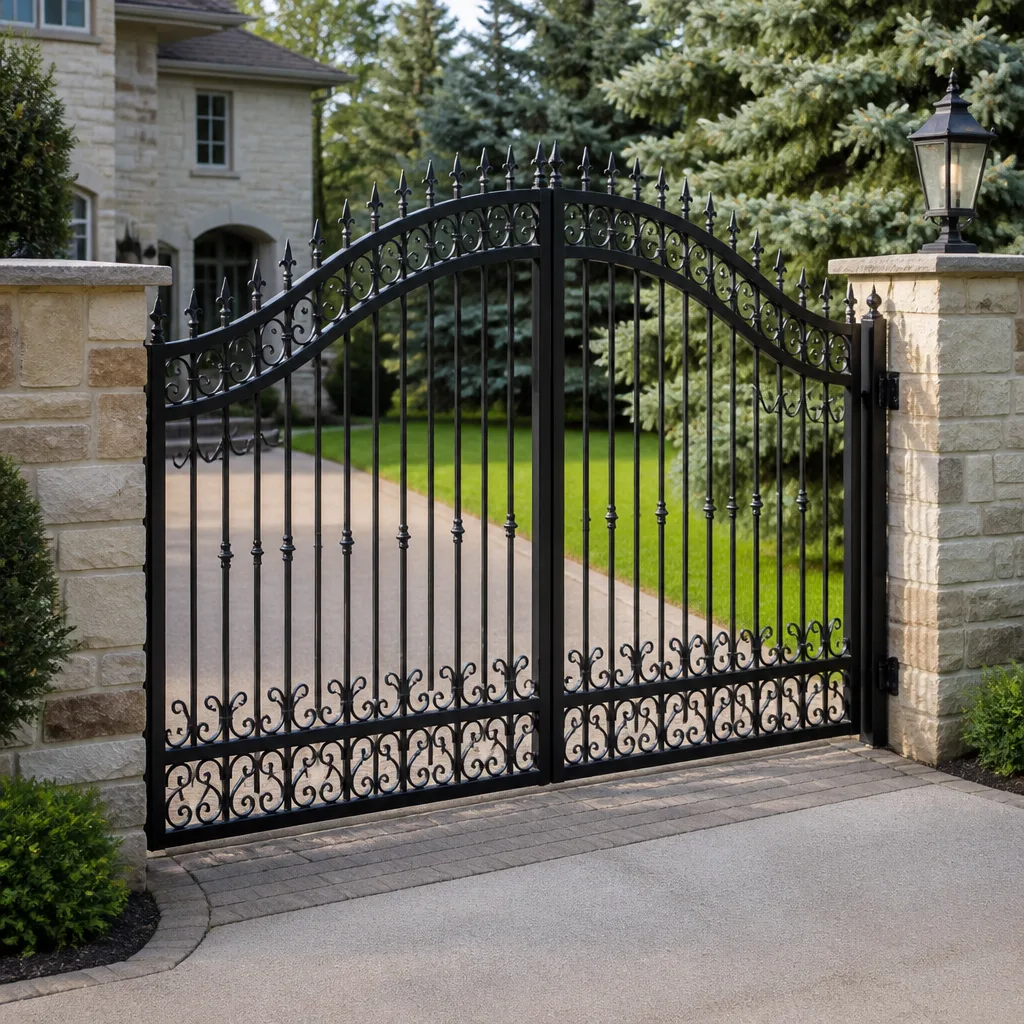
- Wrought iron
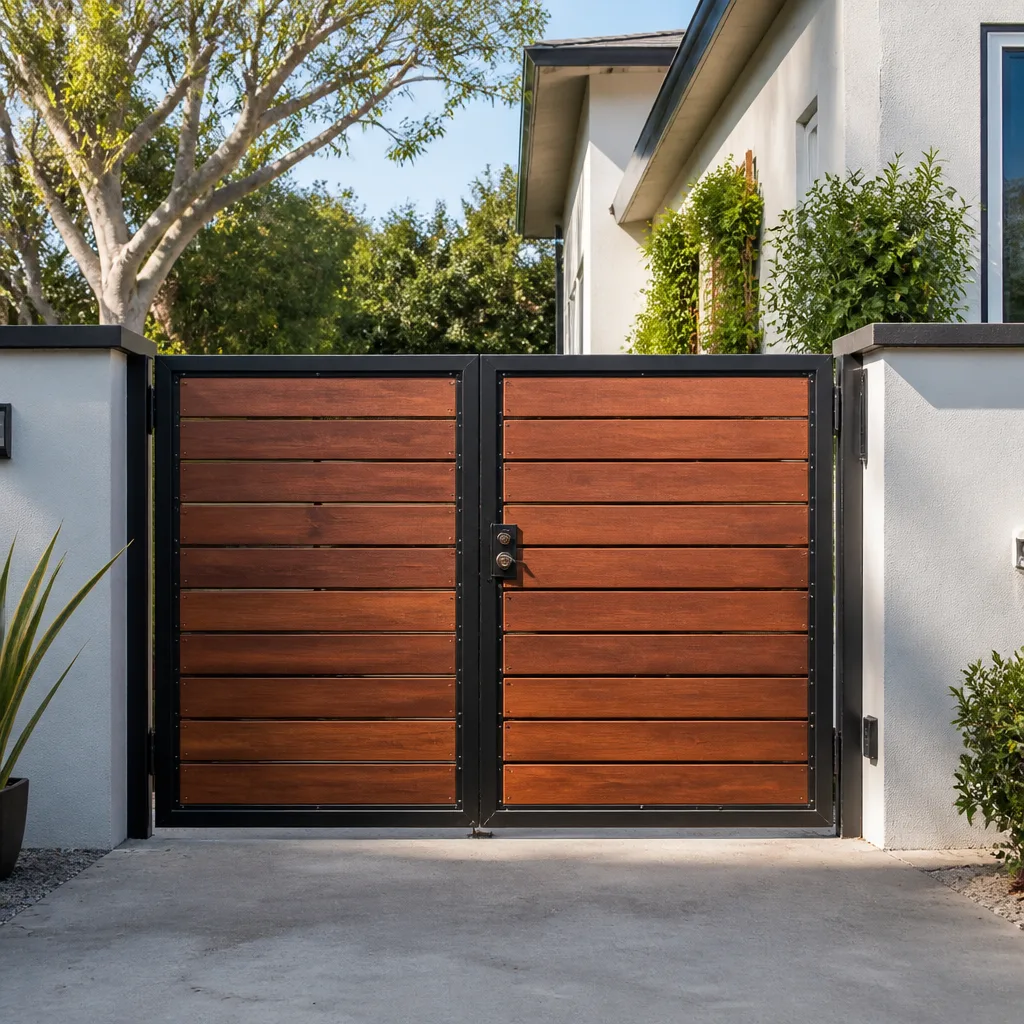
- Wood & steel frame
- Farm & ranch
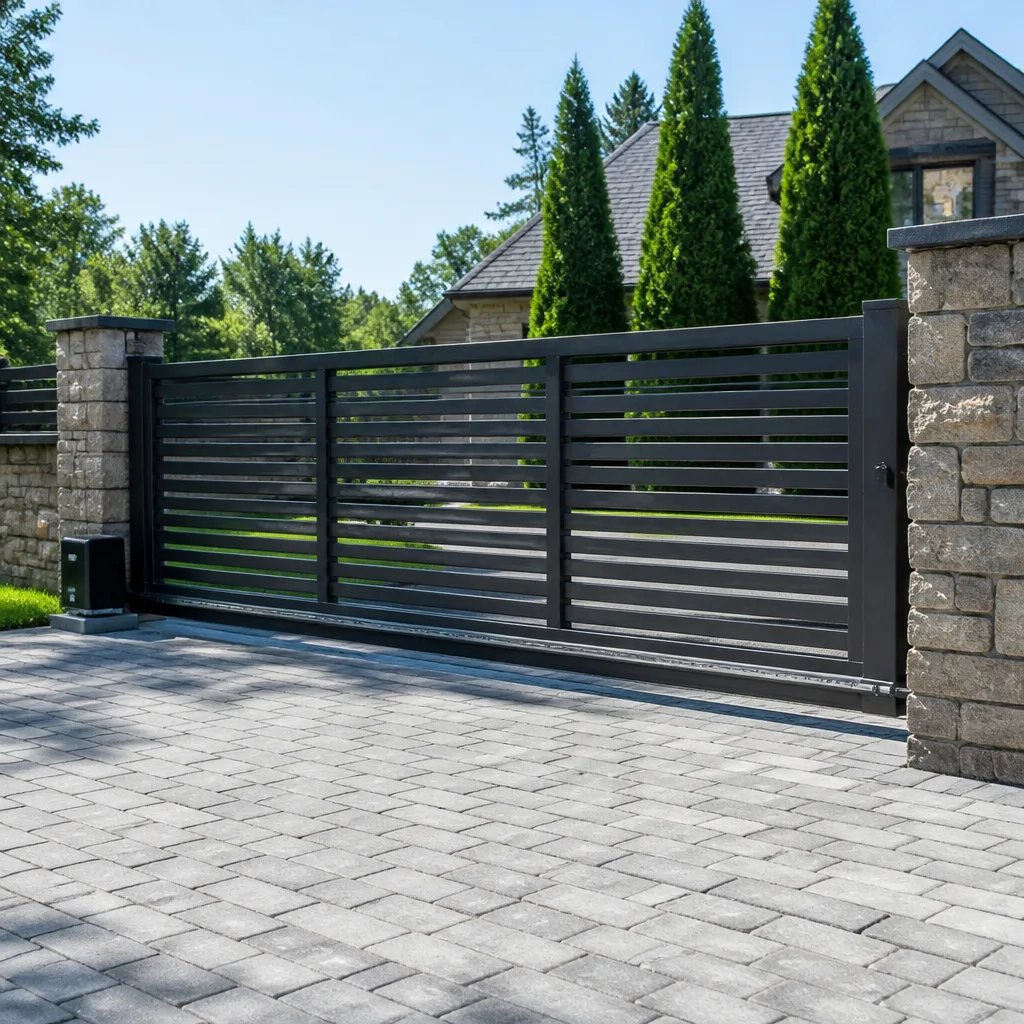
- Sliding driveway gates
- LiftMaster operators
Quick Answer
Gate repair warning signs fall into two categories: urgent failures that will strand you or create a safety hazard within days (grinding gears, snapped hinges, a gate that reverses on its own, control board failure), and developing problems you can schedule around (minor rust, slowing movement, intermittent sensor faults). The highest-risk profile most Almaden homeowners miss is the gate that “works fine mostly” but hesitates, shudders, or trips its safety sensors intermittently. That gate is demonstrating early-stage component failure, and the repair cost doubles or triples once the part fails completely.
Table of Contents
- How to Read the Warning Signs: Urgent vs. Monitor-and-Schedule
- Operator Motor Signs vs. Control Board Signs: Telling Them Apart
- What Grinding, Clicking, and Humming Tell You at the Component Level
- Visual Warning Signs Specific to Almaden Conditions
- Why “Works Fine Mostly” Is the Riskiest Failure Profile
- Photo Eyes and Safety Edges: Warning Signs That Fail Silently
- Rust, Wheels, and Track Friction: The Almaden Predictor
- Common Mistakes to Avoid
- When to Call a Professional
- Frequently Asked Questions
- The Bottom Line
How to Read the Warning Signs: Urgent vs. Monitor-and-Schedule
Every gate symptom communicates something specific. The trick is knowing which symptoms mean “act today” and which mean “put it on the calendar.” Most Almaden homeowners we talk to either panic over cosmetic rust or ignore a clicking gearbox until the gate stops moving entirely. Neither response is useful.
Here’s the classification system we use when we diagnose gates in Almaden:
- Urgent: act today or this week. Any symptom that involves the gate failing to close completely, reversing on its own, or making grinding/gear-stripping sounds is urgent. These indicate a component that is actively destroying itself or a safety system that is no longer functioning. A gate that reverses without input is a serious safety liability, and a gate that grinds when it moves is shedding metal shavings into its own gearbox.
- Monitor and schedule: plan for a repair within 30-60 days. A gate that moves slower than it did six months ago, surface rust on non-structural hardware, or a keypad that needs a firmer press than it used to. These are developing problems. They won’t strand you tomorrow, but they don’t improve on their own either.
- Cosmetic only: note it, don’t fix it yet. Surface oxidation on decorative ironwork, faded powder coating, a hinge that squeaks but still moves freely. These affect curb appeal more than function. Budget for them, but don’t interrupt your week.
The classification system matters because gate components fail in sequence, not in isolation. A dragging wheel makes the operator work harder. The harder-working motor draws more current. The higher current draw stresses the control board. Within a few months, a $120 wheel replacement becomes a motor failure, and the board goes next. For a full breakdown of what we repair, see our Gate Repair in Almaden services.
Operator Motor Signs vs. Control Board Signs: Telling Them Apart
When a gate stops mid-cycle, Almaden homeowners often assume the motor died. But in our experience with electric gates on this side of San Jose, a stopped gate is just as often a control board issue, and the two require different fixes at different price points. Knowing which one you’re looking at saves you from paying for the wrong repair.
Operator motor failure signs
The motor is the part that physically moves the gate. When it’s failing, it communicates through sound and effort:
- Humming without movement. The motor is receiving power and trying to turn, but something mechanically prevents it. This is often a seized gearbox or a physically jammed gate. If you hear a hum and the gate doesn’t budge, don’t hold the button or keep retrying. That burns out the motor winding.
- Slowing movement over weeks or months. Motors don’t gradually lose power on their own. A gate that moves progressively slower is telling you that the motor is working against increasing mechanical resistance, usually a failing bearing, rusted wheel, or misaligned track.
- Intermittent “laboring” sounds. When the motor’s sound fluctuates mid-cycle, from normal to strained to normal again, the armature is binding at a specific point in the gate’s travel. That’s a mechanical drag problem that will eventually overheat the motor.
Control board failure signs
The control board is the brain. It interprets signals from keypads, remotes, and safety sensors, then tells the motor what to do. Board failure doesn’t sound like anything because the board is silent:
- Gate stops mid-cycle and won’t respond to any input. If the gate stops and the keypad, remote, and intercom all fail to restart it, the board is likely the culprit. A motor failure usually still allows the board to click or attempt a start.
- Unpredictable behavior. The gate opens when you press the close button. It closes halfway and reopens. It operates fine for three days, then ignores inputs for an hour. These are classic board symptoms, and they’re common on LiftMaster and FAAC boards that have been exposed to Almaden’s winter moisture.
- One function works, another doesn’t. The keypad opens the gate but the intercom doesn’t, or the remote works but the keypad doesn’t. When one input stops working, the board’s receiver for that channel is failing, not the motor.
We’ve seen Almaden homeowners replace a perfectly good motor because the board was misdiagnosed, and vice versa. If you’re unsure, a specialist with brand-specific experience on LiftMaster, FAAC, BFT, and Mighty Mule systems can narrow the problem down in a single visit. Our Electric Gate Repair in Almaden page explains how we diagnose electric systems from the operator to the keypad.
What Grinding, Clicking, and Humming Tell You at the Component Level
Gate sounds are diagnostic data. Almaden homeowners who learn to read them catch failures early; those who ignore them pay for it. Here’s what each sound means when we trace it to the component that’s actually making it.
Grinding or crunching
Component: The gearbox or drive mechanism. Grinding means metal-on-metal contact where smooth engagement is supposed to happen. Inside a gate operator, gears mesh with tight tolerances. When a tooth chips or a bearing seats, the movement becomes gritty and loud. Every grind cycle is shedding metal into the gear housing, which accelerates further damage. If you hear grinding on a Mighty Mule or Ghost Controls opener, stop using the gate and call for service. The gearbox is already compromised.
Rapid clicking
Component: The control board relay or the limit switch. A rapid click when you press the button usually means the board is trying to engage but the signal isn’t completing. On some LiftMaster and Linear boards, a repeated click is the relay chattering because the capacitor that powers the motor start circuit has failed. On others, the click is a limit switch that’s stuck or misaligned, telling the board “the gate is already where you want it” when it isn’t.
Humming without movement
Component: The motor start capacitor. When you press the button and hear a low hum but the gate doesn’t move, the capacitor that gives the motor its initial electrical kick has failed. The motor is trying to start on its own, which it can’t do without that jolt. This is a common failure we repair in Almaden, especially on gates that cycle frequently for delivery vehicles and multiple-resident access.
Squealing or screeching
Component: The belt or chain on the drive mechanism. A high-pitched squeal on a belt-driven operator means the belt needs tensioning or replacement. On a chain drive, the same sound means the chain has stretched or the sprockets are worn. Both are inexpensive fixes compared to the damage an unadjusted drive causes when it slips repeatedly.
Visual Warning Signs Specific to Almaden Conditions
Almaden’s specific microclimate shapes how gates fail here. We’re far enough from the Bay’s fog line that marine-layer moisture isn’t a daily issue, but we get enough winter rain and seasonal temperature swings that certain failure patterns repeat across the valley. Learning to read rust patterns, powder coat wear, and surface degradation tells you more than any generic gate maintenance checklist.
Rust that means water intrusion vs. surface oxidation
Not all rust is equal. Surface oxidation, that light orange bloom that appears on wrought-iron gates after a few wet seasons, is cosmetic. It looks bad but doesn’t affect function. Water intrusion rust is different. It appears as bubbling paint, flaking metal, or rust that has visibly eaten through the surface layer. Bubbling paint on an operator housing or a hinge bracket means water has gotten inside and is corroding from within. In Almaden, we see this on gates whose operators sit low to the ground where sprinkler overspray hits them year-round.
Powder coat failure patterns
Powder coat doesn’t fail uniformly. When you see flaking concentrated around hinge points, weld joints, and the bottom rail, that’s mechanical stress plus moisture. The coating has cracked at flex points, water got underneath, and the metal beneath is now oxidizing. This pattern matters because the same moisture that’s causing visible rust on the surface is also working its way into bearings and hinge barrels. A gate with flaking powder coat at the hinges is a gate that’s silently corroding its own pivot points.
Leaning or sagging you can see from the driveway
Stand in your driveway and sight down the top rail of the gate. If it dips in the middle or rises at the latch end, the gate’s weight is no longer evenly distributed. That means a hinge is failing or a post is shifting. In Almaden’s clay-heavy soil, posts shift subtly with winter rain and summer dry cycles. A gate that leans slightly but still closes is telling you that its structure is actively changing. The operator has to work harder against that misalignment every single cycle, and the motor pays the price.
Why “Works Fine Mostly” Is the Riskiest Failure Profile
The gate that works fine most of the time is more dangerous than the gate that clearly doesn’t. A completely dead gate forces you to call for service. An intermittent one lets you postpone the call, and every postponement adds invisible wear to components that are already failing. We’ve seen this pattern in Almaden often enough that we can predict the timeline.
Here’s what “fine mostly” typically means at the component level:
- Intermittent sensor fault. The photo eye trips the gate to reverse once every twenty cycles. The problem is probably a wiring connection that’s loose or corroding. It works because the connection is intermittent. Over time, the control board resets itself repeatedly each time the fault occurs. Boards that reset constantly fail early.
- Hesitation before movement. You press the button and the gate pauses for a second or two before moving. This is usually a capacitor that’s degrading or a gearbox that’s stiff from moisture. The delay doesn’t feel urgent because the gate still opens. But every hesitation is the motor struggling against initial resistance. Motor lifespan drops dramatically under repeated stall conditions.
- Uneven movement speed. The gate moves normally for most of its travel, then slows noticeably for the last few feet. This is a track or wheel problem in the segment where the drag is happening. The motor compensates by drawing more current. More current means more heat. More heat means shorter motor life. It’s not dramatic, but it’s relentless.
- Noise only in cold weather. The gate squeals or groans in the morning, then sounds fine once it warms up. Cold temperatures thicken lubricant and make clearance issues more pronounced. This isn’t a weather quirk. It’s a bearing that’s tight and will eventually seize.
Each of these symptoms costs between $120 and $300 to fix properly. The motor or control board failure they lead to costs between $600 and $1,500. When we tell Almaden homeowners that the “mostly fine” gate is the highest-risk failure profile, this is what we mean. See our Gate Repair in Almaden overview for common repairs and how we approach them.
Photo Eyes and Safety Edges: Warning Signs That Fail Silently
Safety sensors are the gate components that fail without telling you. A grinding gearbox announces itself. A failing safety edge on an automated gate typically fails silent, and you discover the problem only when something or someone is in the gate’s path. In Almaden, where many properties run automated gates on daily cycles for vehicle access, this silent failure is the warning sign most homeowners never think to check.
How to recognize a failing photo eye
Photo eyes are the paired sensors on either side of the gate opening that project an invisible beam. When the beam is interrupted, the gate reverses or refuses to close. A failing photo eye usually doesn’t stop working completely. It becomes unreliable. The gate reverses for no apparent reason. Or it closes when it shouldn’t because the sensor has stopped detecting interruptions. Test yours monthly: with the gate open, pass your hand through the beam path. The gate should not close. If it closes anyway, one or both photo eyes have failed or lost alignment. This is a same-week repair, not a monitor item.
Safety edge failures
A safety edge is a pressure-sensitive strip along the leading edge of the gate that reverses movement when it contacts an obstacle. Over time, the rubber strip cracks, water gets into the internal switch, and the edge stops sending its signal. The gate still operates normally. The edge just doesn’t detect anymore. You can test this by pressing firmly along the edge while the gate is closing. If the gate doesn’t reverse, the safety system is compromised. This is a significant liability issue, and it needs immediate attention.
For automated systems, the full stack of safety components needs to work together correctly. Our Electric Gate Repair in Almaden page details how we cover operators, control boards, keypads, intercoms, and the safety sensors that protect your property and the people using the gate.
Rust, Wheels, and Track Friction: The Almaden Predictor
Almaden’s slide gates and swing gates fail in predictable ways because the physical demands on wheels, tracks, and hinges are constant. A cantilever slide gate that weighs hundreds of pounds rolls over the same wheels dozens of times a day. Each cycle applies load to bearings, axles, and the track surface. The deterioration is gradual, but the signs are visible long before failure if you know what to look for.
Wheel wear patterns
Slide gate wheels don’t wear uniformly. When a wheel’s bearing starts to fail, the wheel stops rolling freely and begins to skid. Skidding wears a flat spot on the wheel’s surface. That flat spot then thumps as the gate moves, and the thumping accelerates wear on every other wheel and on the track. When you see flat-spotted wheels or when your gate thumps with each foot of travel, the wheels are past monitor status. Replace them before the track itself wears through.
Track alignment
A slide gate’s track should be straight and level. When it isn’t, the gate’s weight transfers unevenly to the wheels, partially lifting some and overloading others. You can spot track problems by watching the gate move: if it drifts sideways slightly or if the gap between the gate frame and the track changes as it travels, the track has shifted. Almaden’s soil movement means track alignment is a recurring maintenance issue here. It’s rarely an emergency, but it is a scheduled repair.
Swing gate hinge wear
Swing gates hang entirely from their hinges. When a hinge bearing wears down, the gate drops slightly at the latch end. You’ll see the gate scrape or drag at the latch side or the gap between the gate and its post will be wider at the top than the bottom. Hinge wear is one of the most common mechanical issues we repair in Almaden, and it’s also one of the most overlooked. Homeowners notice the gate “doesn’t close right anymore” but don’t connect it to the hinge. Replacing hinge bearings is a small job. Replacing a gate that’s fallen off its hinges is a much bigger one.
If the rust and wheel wear have progressed to the point where repair no longer makes financial sense, a replacement might be the right call. We help Almaden property owners make that decision honestly. See our Gate Installation in Almaden page for how we handle replacement from removal to final testing.
Common Mistakes to Avoid
- Ignoring intermittent symptoms because the gate still opens. “Fine mostly” is a pre-failure state, not a working state. Every intermittent fault is a component degrading. The cost difference between catching it now and catching it after failure is typically triple or more.
- Lubricating without cleaning first. Spraying lubricant onto dirty or rusted parts traps grit and makes the problem worse. The moving surfaces need to be clean before any lubricant goes on. A specialist knows what to use on which component. The wrong lubricant on a gate operator’s plastic gears can degrade them.
- Attempting gearbox or motor repairs as a DIY project. Gate operators handle significant tension and torque. A gearbox that’s been opened and reassembled incorrectly can fail suddenly, and a motor wired incorrectly can damage the control board. We always recommend a trained professional for powered components.
- Replacing one component without checking what caused it to fail. A burned-out motor is rarely the cause of a failure. It’s usually the victim: a dragging wheel, a seized gearbox, or a failing capacitor created the conditions that killed it. Replacing the motor without addressing the root cause means you’ll replace the motor again.
- Testing safety sensors once and trusting them forever. Photo eyes and safety edges degrade over time. A monthly test takes ten seconds. Not doing it means you’re relying on a component that may have failed silently months ago.
- Postponing hinge or wheel work because the gate “still closes.” The gate is wearing out its operator every time it works against a misaligned hinge or bad wheel. The operator is the expensive part. Scheduling the mechanical fix protects the electrical investment.
When to Call a Professional
Call a gate specialist when the gate grinds, when it won’t respond to any input, when safety sensors have stopped reversing the gate, or when the gate has completely stopped moving. These are conditions where continued use damages components further or creates a safety risk. Also call when you’ve noticed the gate slowing, hesitating, or making new noises for more than a week. Those are early-stage failures, and the repair is easier and cheaper now than it will be later.
Gate Repair Almaden offers free estimates in Almaden. Call (833) 620-6313 and a gate specialist will assess what you’re seeing, tell you honestly whether it’s urgent or can be scheduled, and quote the repair before any work begins. For an overview of everything we handle, start at our Gate Repair Almaden home page.
Frequently Asked Questions
Most gate repairs in Almaden fall between $150 and $800 depending on the component. Hinge bearing replacements and wheel swaps typically run $150-$300. Control board replacements for LiftMaster, FAAC, or BFT systems usually run $400-$700. Full operator replacements can reach $1,200-$1,800. The price is always quoted and agreed before any work starts. Call (833) 620-6313 for an exact quote, estimates are free.
Yes. We work on Mighty Mule openers regularly, along with LiftMaster, FAAC, BFT, Linear, Viking, Ghost Controls, DoorKing, and Elite. Because we’re familiar with the specific boards and motors on these brands, we can often diagnose the fault on the first visit and carry the right part with us. Call (833) 620-6313 to describe what your Mighty Mule is doing and we’ll tell you what it likely needs.
A gate that stops halfway and reverses is usually receiving a false safety sensor signal. The photo eye is misaligned, blocked, or failing, and the board interprets it as an obstruction. It can also be a limit switch that’s lost its setting. Both are repairable in a single visit. Call (833) 620-6313 to schedule a diagnostic.
When the cost of repairing multiple components exceeds about half the price of a new gate, replacement starts to make sense. Severe structural rust, a gate that’s fallen or sagging badly, or an operator that needs both a motor and a board at once are common tipping points. We’ll walk you through the math on your specific gate and tell you honestly what we’d do if it were ours. Our Gate Installation in Almaden page covers the replacement process.
Operator motors that fail from mechanical drag are the most common problem we see in Almaden. Wheels, hinges, or tracks create resistance, the motor works harder, and it fails prematurely. The fix is usually a mechanical repair to the source of the drag plus a motor replacement. That’s why we emphasize checking mechanical components before assuming an electrical failure.
Yes. We work on gates at HOAs and commercial properties throughout Almaden, including operators from LiftMaster, DoorKing, and Viking that are common in access control applications. Commercial systems usually need faster response, and we prioritize those calls accordingly. Call (833) 620-6313 to discuss your system.
The Bottom Line
Gate warning signs are only useful if you act on them in the right order. Urgent sounds like grinding and urgent behaviors like unexpected reversing need attention immediately. “Mostly fine” symptoms need scheduled attention before they become urgent. And silent failures in safety sensors need deliberate testing because they won’t announce themselves. The gate that works perfectly until it doesn’t is the gate whose owner ignored the quieter signals. Pay attention to the hesitation, the hum, the uneven movement, the rust at the hinges. Your gate is telling you what it needs. A specialist who knows your brand, whether LiftMaster, Mighty Mule, FAAC, or BFT, can tell you exactly what it’s saying.
Written by the team at Gate Repair Almaden, serving Almaden since 2018.
See the difference
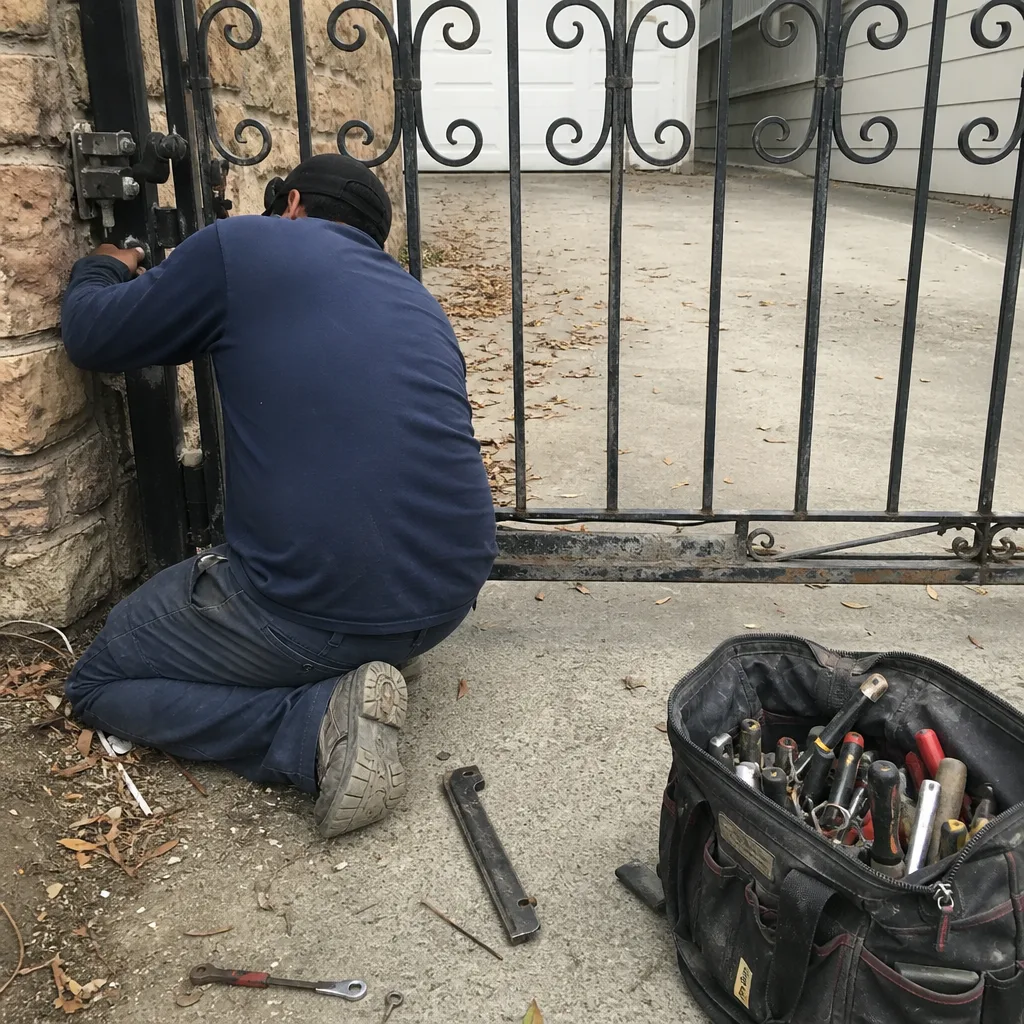 Before
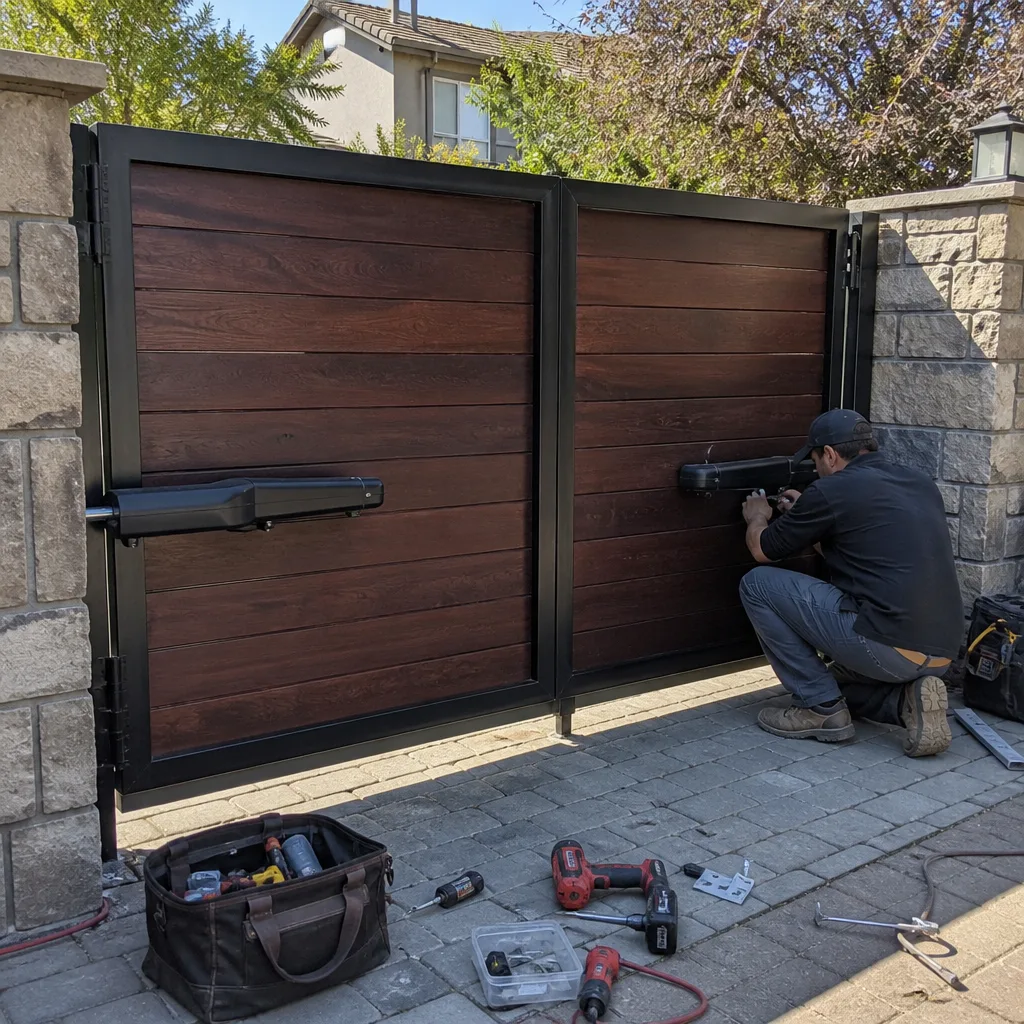 After
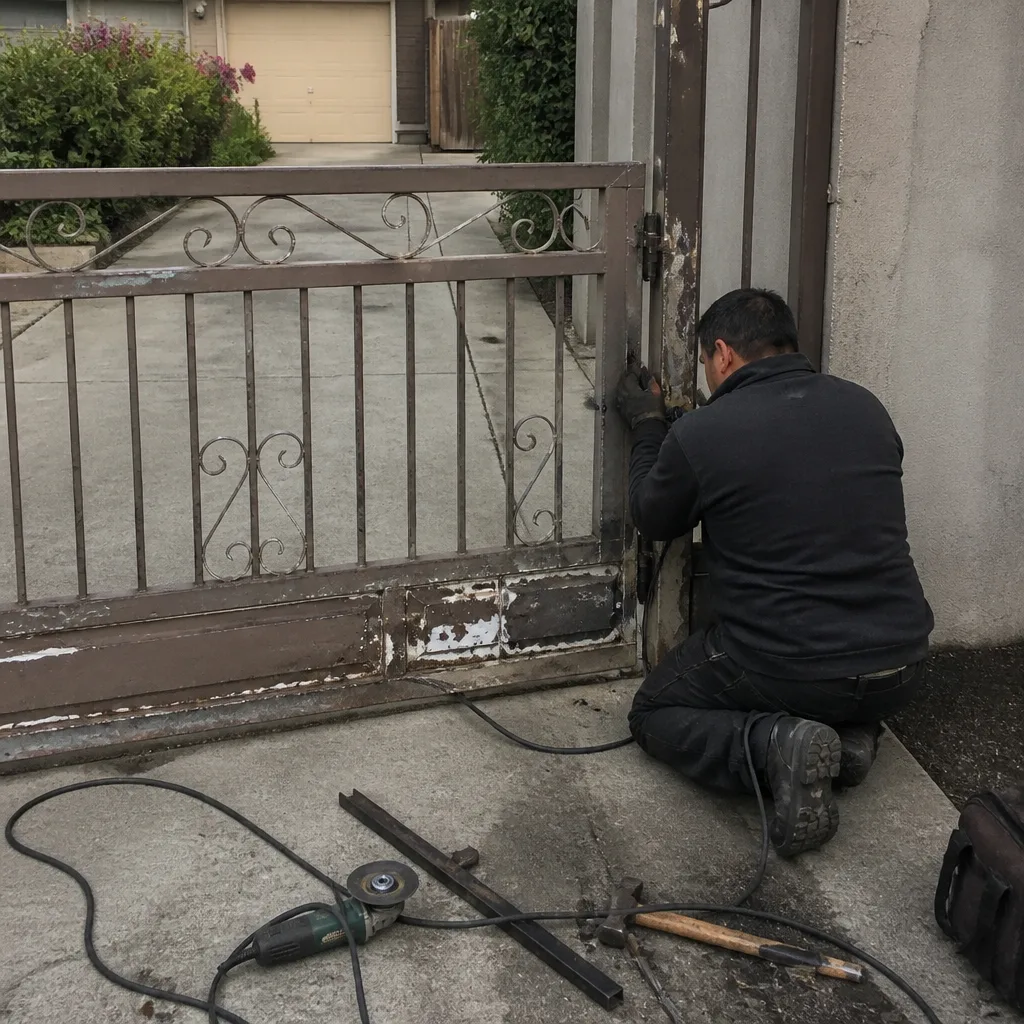 Before
 After
 Before
 After