
Last updated November 2, 2026
 Wrought iron
 Wood & steel frame
 Farm & ranch
 Sliding driveway gates
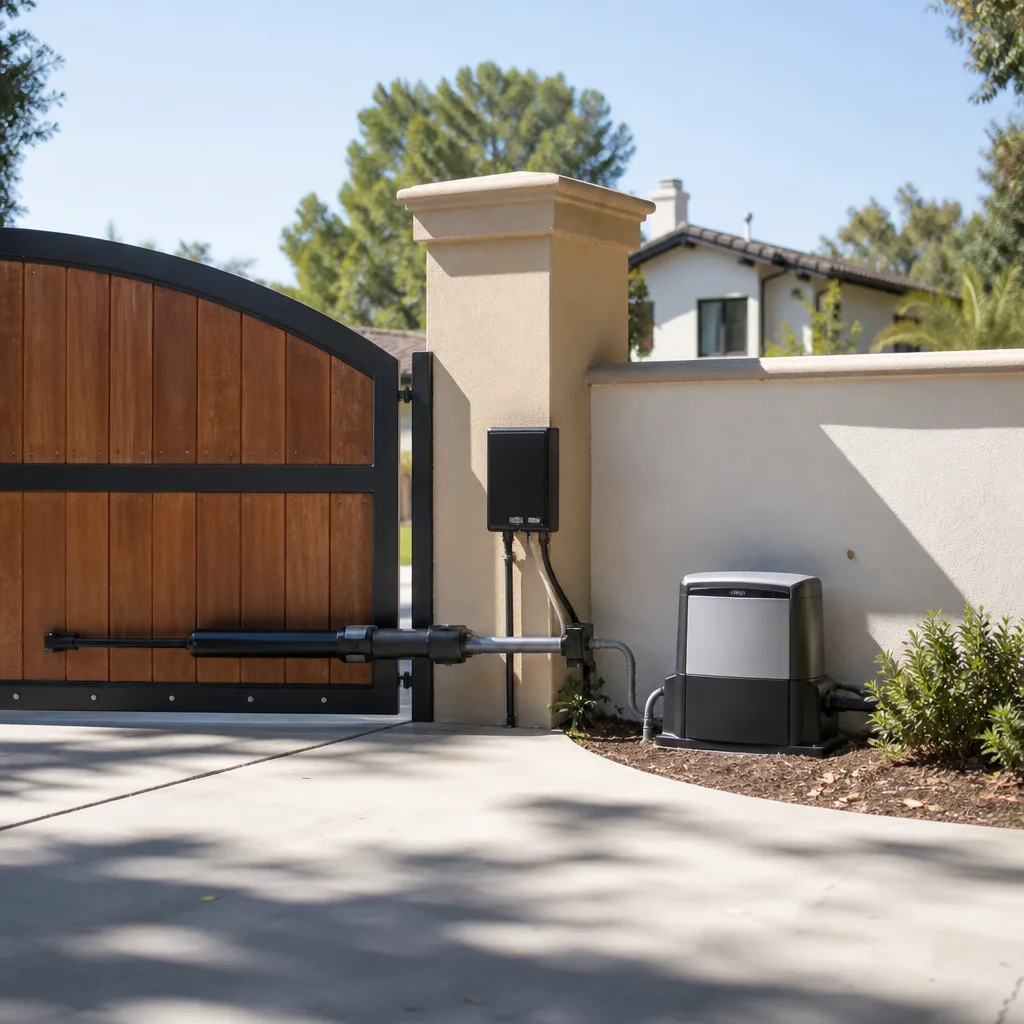 LiftMaster operators
Free on-site gate assessment - hinges, posts, and your LiftMaster or Nice gate operator checked before anything is quoted
The assessment is free and the quote is the invoice.
Get your free estimateSeasonal Gate Repair Care for Almaden: Year-Round Homeowner’s Guide
Most Almaden homeowners don’t think about their gate until it stops working. But here’s the thing we see every year: a gate that fails in January almost always showed warning signs in October. Almaden’s climate creates a predictable failure calendar. Hot, dry summers bake capacitors and stretch chains. The compressed winter wet season finds every corroded connection and every cracked seal. This guide walks through what to check, when to check it, and what’s actually worth paying a professional to handle with our Gate Repair services. If you own a powered or manual gate in Almaden, you’ll finish this with a month-by-month plan that works with our microclimate, not against it.
Styles & brands we work with
- Wrought iron
- Wood & steel frame
- Farm & ranch
- Sliding driveway gates
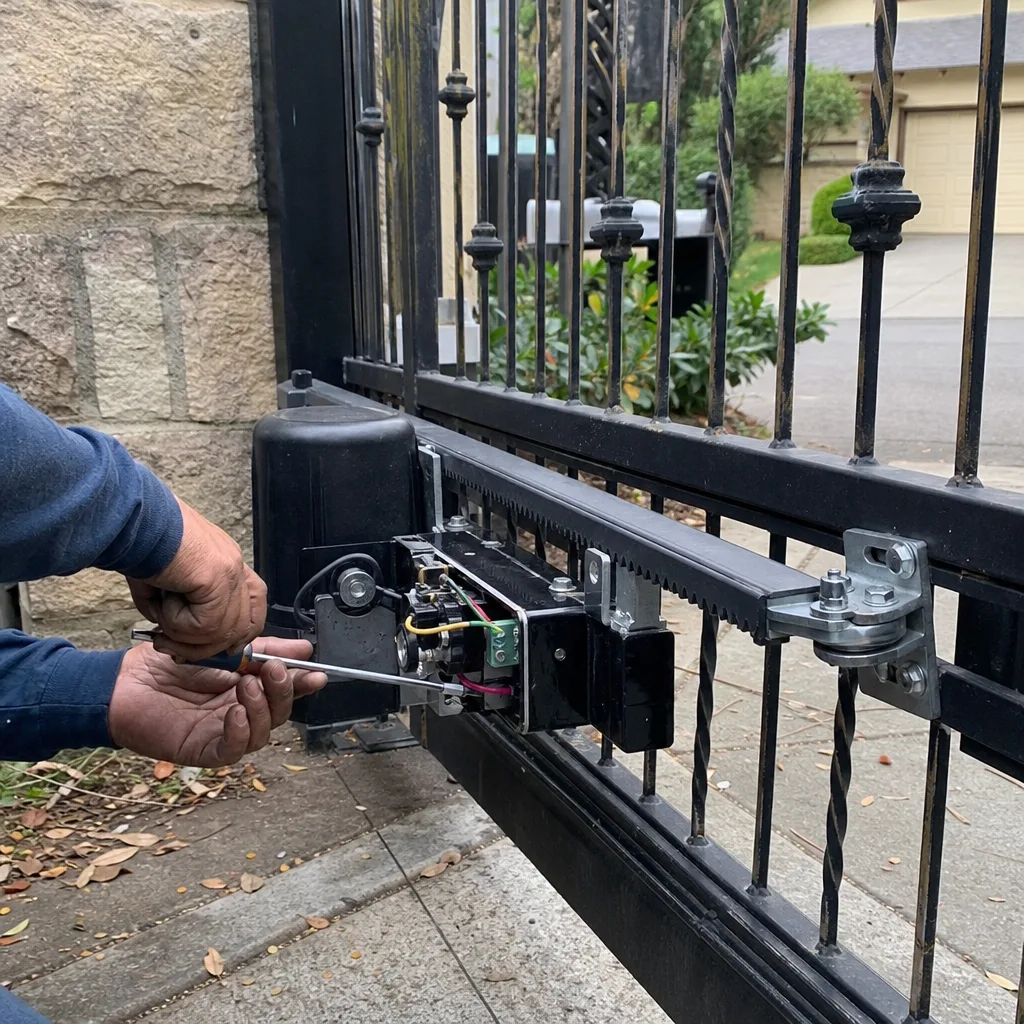
- LiftMaster operators
Quick Answer
Seasonal gate care in Almaden means aligning maintenance tasks with the area’s two dominant seasons: a long dry heat spell from May through October, and a short but intense wet season from November through March. The most important seasonal jobs are testing your battery backup before the first storm, lubing and adjusting hardware after summer’s thermal expansion, sealing control board enclosures against winter moisture, and doing a full spring inspection for corrosion and post-footing heave. Most homeowners can handle visual checks, but anything involving high-tension springs, buried conduit, or operator internals should go to a specialist.
Table of Contents
- Why Almaden’s Climate Is Harder on Gates Than You Think
- Fall Pre-Rain Checklist: The Most Important Season for Gate Owners
- Winter: Why Electric Gates Fail During Almaden’s Rainy Season
- Spring Post-Wet-Season Inspection: Heave, Corrosion, and Leveling
- Summer Heat and Your Gate Operator: Capacitor Degradation and Thermal Expansion
- Month-by-Month Task Map for Almaden Homeowners
- What You Can Do Yourself vs. When to Call a Gate Specialist
- Common Mistakes to Avoid
- When to Call a Professional
- Frequently Asked Questions
- The Bottom Line
Why Almaden’s Climate Is Harder on Gates Than You Think
Almaden sits in a valley microclimate that swings harder than most of the South Bay. Summer daytime highs regularly push into the 90s, with surface temperatures on dark metal gates reaching 140°F or more. Winter nights dip into the 30s. That’s a 60-degree temperature swing across the year, and a 40-degree swing within a single 24-hour period isn’t unusual in late spring and early fall. Metal expands and contracts with every one of those cycles. Hinges shift. Bolts loosen. Seals crack. A gate that operates smoothly in June can bind by September simply because the steel grew by a few millimeters and doesn’t want to settle back.
Then there’s the rain. Almaden gets roughly 15 to 20 inches of rain per year, but almost all of it lands between November and March. That concentrated wet season means electrical components sit dry for eight months, then get hit with moisture, humidity, and wind-driven rain for four. Any gap in a control board enclosure, any degraded conduit fitting, any unsealed keypad becomes a water intrusion point the moment the first atmospheric river rolls through. We’ve opened control boxes in December that looked pristine from the outside and had condensation pooling on the board inside.
The good news: Almaden’s climate pattern is predictable. That means the right maintenance calendar can prevent most seasonal failures. The bad news: most homeowners follow generic maintenance advice written for other climates, which misses the specific vulnerabilities this area creates. For truly local guidance, see The Complete Gate Repair Guide for Almaden Homeowners.
For a broader look at the range of gate issues that pop up across Almaden, see our complete guide to gate repair in Almaden.
Fall Pre-Rain Checklist: The Most Important Season for Gate Owners
If you only do gate maintenance once a year, do it in October. Everything that will fail during the rainy season shows itself in the dry weeks before it. This is the window where you can fix a $40 seal instead of replacing a $400 control board. Here’s the checklist we run through on every fall inspection in Almaden.
1. Seal and Inspect the Control Board Enclosure
Your operator’s control board lives in a plastic or metal box mounted on or near the gate. That box has a gasket, and that gasket degrades under summer UV. Check it. Look for cracks, brittleness, or gaps where the box meets its lid. Check the conduit entry points where wires come into the enclosure. If those entry points aren’t properly sealed with a cable gland or silicone, water follows the wire straight into the box. Even a pinhole gap lets in enough humidity to corrode terminals over a wet Almaden winter.
2. Test the Battery Backup Under Load
Almost every electric gate operator has a battery backup for power outages. Here’s what most homeowners miss: a battery can hold surface charge and test fine with no load, then collapse the moment it actually has to open a 300-pound gate. The test that matters is a load test. Disconnect main power and cycle the gate open and closed, not once but three full cycles. If the gate slows noticeably on cycle two or three, the battery is nearing end of life. Storm season is when you need it most, and January is the wrong time to find out it’s dead.
3. Check Photo Eyes and Safety Sensors
Photo eyes get dusty over summer, and dust plus moisture equals a false trip. Wipe the lenses with a dry cloth. Check alignment: a sensor that was barely passing on a dry day will fail when rain pushes a mounting bracket a degree or two out of line. If your gate reverses for no reason during the first storm, misaligned or dirty photo eyes are the most common cause we see in Almaden.
4. Lubricate Moving Parts with the Right Product
Use a lithium-based grease on hinge pins and a dry silicone spray on slide tracks. Don’t use WD-40 as a lubricant; it’s a solvent that strips existing grease and leaves metal with less protection than before. Pay special attention to the chain or belt on slide gates, which sees maximum tension during cold, wet weather when metal contracts.
5. Trim Back Vegetation That’s Grown Over Summer
Overhanging branches drop leaves and debris into tracks during winter storms. Ivy and ground cover creep toward slide gate tracks all summer. Clear two feet of clearance around the gate’s full travel path. Debris in a slide gate track is the single most common cause of winter binding we see in Almaden neighborhoods with mature landscaping.
6. Tighten Every Fastener
Thermal expansion of metal loosens bolts across summer. Walk the gate and check hinge bolts, bracket mounts, track bolts, and the operator mounting plate. A loose track bolt in November becomes a bent track in February when storm force pushes against the gate.
Winter: Why Electric Gates Fail During Almaden’s Rainy Season
January and February are our busiest months for electric gate repair in Almaden. That’s not a coincidence. The wet season concentrates moisture exposure into a short window, and any weakness that developed over the dry months gets exposed fast. Power outages from wind and downed limbs force gates onto battery backup that many homeowners haven’t tested. Water intrusion finds every marginal conduit fitting. Cold snaps contract metal and expose alignment problems that summer heat was masking.
Here’s what actually fails and why, so you know what to watch for when the first storm hits.
Capacitor Failure on Cold Starts
Operator capacitors age faster in Almaden’s hot summers, then fail when asked to deliver a cold start in 40-degree weather. The early warning sign is a gate that stutters, hums without moving, or starts slower than normal on cold mornings. If you hear the operator humming but the gate doesn’t move, that’s a capacitor that can’t hold enough charge to kick the motor over. It usually fails for good within a few days of showing that symptom, so don’t wait.
Control Board Corrosion
This one is silent until it isn’t. Humidity gets into an enclosure through a compromised seal, condenses on the board during overnight temperature drops, and corrosion starts on terminals and solder joints. The gate works fine for weeks, then starts behaving erratically: opens by itself, refuses to close, loses keypad programming. By the time symptoms appear, the board usually needs replacement. This is why fall sealing matters. Brands like Linear and DoorKing use coated control boards that resist humidity better than some competitors, but no board survives standing water.
Track Binding on Slide Gates
Almaden has a lot of slide gates, especially on properties with long driveways or limited swing clearance. Track binding in winter usually comes from one of three things: debris in the track, thermal contraction throwing off roller alignment, or a post footing that shifted slightly during the first heavy rain. You’ll hear a grinding or feel the gate pulsing as it moves. If you catch it early, it’s often a simple adjustment. If you let it run for a few weeks, the chain stretches and the rollers wear unevenly, and the repair gets more expensive.
Keypad and Intercom Water Ingress
Exterior keypads and intercom stations face the full force of winter storms. The rubber membrane buttons crack after enough UV exposure, and water seeps in. Common symptom: keypad works intermittently, or certain digits stop responding when it’s wet out. If you’re a HOA manager or property owner with a shared access gate, a dead keypad on a rainy Monday is a call you don’t want to get. Ghost Controls and Viking both make weatherproof keypads with decent gaskets, but the gasket only works if the unit wasn’t cracked by a lawn service weed whacker over summer.
Battery Backup Collapse During Outages
Almaden’s utility lines run through areas with mature trees, and wind-plus-rain brings limbs down. A gate left without battery backup during an outage is either stuck open (security issue) or stuck closed (access issue). If you didn’t load-test the battery in fall, do it now, before the next storm hits.
Spring Post-Wet-Season Inspection: Heave, Corrosion, and Leveling
Once the rains taper off in March and April, Almaden homeowners get a window to fix what winter did to their gates. This inspection is less urgent than the fall one, but it’s the one that prevents summer failures. Here’s what to look for as the ground dries out.
Post-Footing Heave
Almaden’s soil has a high clay content in many areas, especially in the eastern foothills. Clay absorbs water and swells, then shrinks and cracks as it dries. That cycle can shift gate posts and pier footings by a quarter inch or more over a single wet season. A post that moved means a gate that doesn’t latch properly, hinges that bind, or a slide track that’s no longer level. Stand back and sight down the gate line. If the gate sags or the gap between gate and post is uneven top to bottom, heave is the likely culprit. This is a job for a professional: leveling a gate that shifted requires lifting and re-shimming, not just cranking on a bolt.
Hinge and Hardware Corrosion
Standing water from winter storms accelerates corrosion on exposed metal. Check hinge pins, brackets, and bolts for rust blooms. Surface rust on galvanized steel is cosmetic. Flaking rust on load-bearing hardware is structural. If a hinge pin is rusted enough to seize, the gate motor will strain against it all summer, and that strain shortens operator life. We’d rather replace a $25 hinge bracket in April than a $600 operator in August.
Photo Eye Realignment After Storms
Rain-soaked ground softens, photo eye posts lean a fraction, and the beam breaks alignment. Even if your gate passed the fall check, cold night air and wet soil can shift posts slightly by early spring. After the rain stops, do a quick visual: both photo eyes should face each other directly. If one looks canted, the gate will eventually refuse to close.
Drainage Around the Gate Area
Watch how water drains near the gate after a March rain. Standing water within ten feet of the gate means poor drainage, and water that pools around the post footings accelerates heave and corrosion. A French drain or simple re-grading may be the fix, but that’s outside gate work; we can tell you when it’s the issue, but you’ll want a landscape contractor for the excavation.
If winter left damage that goes beyond seasonable wear, check our page on how we approach gate repair in Almaden for details on what’s repairable versus what needs replacing.
Summer Heat and Your Gate Operator: Capacitor Degradation and Thermal Expansion
Summer in Almaden is the slow season for emergency calls, which is why it’s the right season for upgrades and preemptive work. But heat is doing damage quietly, setting up fall and winter failures. Here’s what’s happening inside your gate system when summer temperatures spike.
Capacitor Degradation
Every electric gate operator has a start capacitor, and capacitors hate heat. The dielectric material inside degrades faster at elevated temperature, and Almaden’s summer sun can push the inside of an operator housing past 150°F on a 100-degree day. A capacitor that spent three summers at those temperatures holds less charge and delivers less start torque. The gate feels sluggish on cold mornings in November because the capacitor already lost capacity months earlier. The early warnings: a slight hum before movement, slower cycle time, occasional failure to start on the first button press.
There’s no home test for capacitor health, but a professional can check capacitance with a multimeter in five minutes during a routine visit. If you’re doing an operator service call for anything in September, ask the tech to check the capacitor while the cover is off. It’s the part most likely to fail during the next rainy season.
Thermal Expansion and Slide Gate Track Alignment
Steel expands about 0.0000065 inches per inch per degree Fahrenheit. A 20-foot steel gate heated from 50°F to 130°F grows nearly an eighth of an inch. That doesn’t sound like much, but slide gate rollers sit in a track with close tolerances. When the gate grows, it presses harder against the rollers and can shift the track alignment slightly. Over multiple seasons, that pressure walks the track out of true. Summer is when you notice it most: the gate starts fine, moves a few inches, then binds or squeals as it travels.
The adjustment is simple for a professional: loosen the track bolts, realign to the gate’s natural path at ambient temperature, re-tighten. Do it before the metal fully cools in October and the problem gets worse.
Motor Overheating from Continuous Cycling
Some properties in Almaden with high traffic (shared driveways, service vehicles, delivery trucks) cycle their gate dozens of times per day. Each cycle generates heat inside the motor windings. In 95-degree weather, the motor runs hotter than its rated continuous operating temperature. The thermal overload protection will kick in, and the gate stops responding until it cools down. That’s a safety feature, not a failure, but repeated thermal trips shorten motor life. If your gate shuts down on hot afternoons and works fine an hour later, you’re hitting thermal overload. A professional can assess whether the operator is sized right for the gate’s weight and duty cycle.
Summer Is the Right Time for Planned Upgrades
Since summer is calmer for repairs, it’s the smart window for upgrades or replacements before the fall rush. If your operator is older and you know it’s on borrowed time, replacing it in August means you won’t be competing with storm-driven emergency calls in January. The same applies if you’re considering a new gate installation in Almaden: an August or September install means your new system has three months of dry-weather shakedown before the wet season tests it.
Month-by-Month Task Map for Almaden Homeowners
This is the entire guide compressed into a calendar you can follow. Not every task applies to every gate; a slide gate owner skips the swing hinge items, and a manual gate owner skips the electronics. But the seasonal rhythm holds across all gate types in Almaden.
January – Observe and Respond
- Watch for erratic behavior during and after storms: reversed operation, partial travel, no response.
- Check that water isn’t pooling near the control box or pooling inside the track.
- If the gate runs on battery backup during an outage, time the cycle and note if it sounds weak.
- Wait for a dry day before doing any exposed electrical work.
February – Post-Storm Cleanup
- Clear all debris from tracks, hinge areas, and photo eye lenses.
- Inspect for rust starting on exposed bolts and brackets.
- Test keypads and intercoms; moisture damage usually shows itself within a week of the first soaking.
- If the gate misbehaved during January, schedule the service call now before another storm hits.
March – Dry-Out Assessment
- Check for post heave: sight down the fence line and look for a sagging or tilted gate.
- Test the gate at different times of day; temperature swings in March can expose intermittent sensor issues.
- Look for standing water near footings.
- Re-lubricate anything you haven’t touched since fall.
April – Spring Tune-Up
- Do a full hardware tightening pass: hinges, brackets, track bolts, operator mounts.
- Clean and realign photo eyes.
- Check chain or belt tension on slide gates.
- Reseal any enclosure gaskets that look questionable before the dry heat sets in.
May through June – Monitor for Heat Effects
- Note any binding or squealing as temperatures climb into the 80s and 90s.
- Clean dust from operator fans and vents (dust plus heat equals overheating).
- Check gate cycle time; slowing usually indicates the motor is working harder than it should.
- Schedule any upgrade or replacement work for this window while demand is low.
July through August – Heat Peak
- Watch for thermal overload trips on triple-digit days.
- If the gate binds at 3 PM but runs fine at 9 AM, thermal expansion is the cause and track realignment is the fix.
- Keep the track clear of dust and sand blown in from dry ground.
- This is the ideal window for a professional inspection without weather pressure.
September – Pre-Fall Audit
- Run the full fall checklist (below) but before the leaves drop.
- Load-test the battery backup while you still have weeks before the first storm.
- Order any parts that showed wear over summer; avoid the January parts rush.
- Trim back vegetation one last time before winter growth slows.
October – Full Fall Pre-Rain Checklist
- Seal all control board enclosure gaps and conduit entry points.
- Test battery backup under full load (three cycles).
- Clean photo eye lenses and verify alignment.
- Lubricate hinge pins and slide tracks with appropriate products.
- Tighten all fasteners and check the operator mounting plate.
- Clear the gate’s full travel path of leaves and debris.
November – First Storm Readiness
- After the first rain, check the control box interior for condensation or moisture tracks.
- Test the gate on a cold morning to catch temperature-related start issues early.
- Verify keypad and intercom function after exposure to rain.
- If anything felt off during the first storm, call before the wet season really begins.
December – Stability Watch
- Keep the track clear after wind events; more leaves drop in December than any other month in Almaden.
- Monitor the gate’s startup sound on cold mornings; a slow lurch on first cycle is your capacitor warning.
- Schedule any needed repairs between storms, not during.
- Confirm that the gate closes fully and latches; winter winds will test any slop in the mechanism.
What You Can Do Yourself vs. When to Call a Gate Specialist
Most of the tasks in this guide are things a careful homeowner can handle: visual inspection, cleaning, light lubrication, tightening accessible bolts, trimming vegetation. That’s honest work that prevents most seasonal failures. But gate systems include components that can hurt you or that require specialized tools and testing gear. Here’s the line, drawn clearly.
Safe for Homeowners
- Wiping photo eye lenses with a dry cloth
- Clearing debris from slide tracks
- Tightening visible mounting bolts with a hand tool
- Trimming vegetation around the gate path
- Visual inspection of the control box exterior and gaskets
- Operating the gate from the keypad to test function
- Checking for visible rust and noting which fasteners are affected
Leave to a Professional
- Anything that requires opening the control board enclosure
- Battery testing or replacement on an operator
- Track realignment or roller replacement on a slide gate
- Adjusting or replacing gate springs (even manual gates store dangerous tension)
- Post leveling or footing repair after heave
- Any electrical wiring, conduit, or connection work
- Operator motor, capacitor, or control board replacement
- Re-sealing conduit entries where the old seal has failed
High-tension springs on manual gates and high-tension chains on slide gates deserve a specific warning: these components are under constant load, and releasing that load incorrectly can cause serious injury. A spring that snaps or a chain that lets go while you’re working with it is moving with enough force to break bone. If a spring looks stretched, a chain has visible kinks, or hardware is rusted enough to question its integrity, don’t try to “just tighten it up” yourself. Call a gate specialist who has the right fixtures and knows how to safely unload and reload tension.
For the same reason, don’t attempt to remove an operator cover and test a capacitor yourself. The capacitor holds a charge even when the unit is unplugged, and a careless discharge can deliver a dangerous shock. This is not about protecting our trade; it’s about a genuine hazard that most homeowners don’t know exists until it bites them.
Our Gate Repair Almaden home page has an overview of what we handle and how to reach us if you’re not sure whether something is DIY or professional territory.
Common Mistakes to Avoid
- Skipping the battery load test because the gate works fine on main power. A battery can hold surface charge while connected to power and fail instantly under load. Power outages in Almaden winter storms are exactly when you need it, and a no-load test tells you nothing.
- Using WD-40 on everything. WD-40 is a water displacer and light solvent, not a lasting lubricant. On hinges and tracks it washes away the grease that was doing the real work and leaves parts drier than before.
- Waiting until the gate breaks to address a binding track. A gate that binds and struggles for weeks is damaging its own motor, chain, and rollers every cycle. The same adjustment that’s a $150 call in September is a $600 call in February, because winter load made everything worse.
- Ignoring the first sign of water in a control box. Condensation inside the enclosure after a storm is a countdown to board failure. A tube of silicone and a new gasket costs less than $50. A replacement control board costs hundreds, plus the labor, plus the downtime.
- Power-washing the gate or operator area. High-pressure water forces moisture past seals that rain never touches. If you power-wash near the operator, you’ve basically made your own way for water to get inside. Hand wash or use low pressure only, never aimed at electrical enclosures.
- Assuming a manual gate needs no seasonal care. Manual gates don’t fail as dramatically as electric ones, but hinge pins corrode, posts heave, and latches misalign just the same. A stuck latch on a manual gate is just as much of a hassle when you’re trying to leave for work.
- Doing fall maintenance in December. By December, the rain has already arrived. The goal of seasonal care is to fix vulnerabilities before moisture finds them, not after. October is the month that matters in Almaden.
When to Call a Professional
Some gate problems are clearly beyond homeowner scope, and knowing when to call saves you money in the long run. Call a specialist if the gate won’t move and the operator hums (capacitor failure), if the gate reverses or stops randomly (photo eyes or board), if the track is visibly out of alignment or the gate binds mid-travel, if the keypad loses programming repeatedly, if you find water inside the control box, or if the gate post has visibly shifted after winter rains. These are not situations that improve with time, and several of them get substantially worse while you wait. Gate Repair Almaden offers free estimates throughout Almaden, and we’re glad to come take a look before jumping to a repair. For help selecting a provider, read Choosing the Right Gate Repair Brand: A Buyer’s Guide for Almaden. Call (833) 620-6313 any time to schedule.
Frequently Asked Questions
Twice a year is the minimum for Almaden’s climate. A thorough fall inspection in October prepares your gate for the wet season, and a spring inspection in April assesses winter damage and catches corrosion before it advances. Homeowners can do the visual checks themselves and bring in a professional for load testing and alignment checks. Find more guides & resources on our blog.
Water intrusion into electrical components during the winter wet season is the most common seasonal failure we see in Almaden. Control board corrosion, keypad failure, and sensor issues almost all trace back to a failed seal or compromised conduit entry that let moisture in during a storm.
Yes. Summer heat degrades operator capacitors and causes thermal expansion that pushes slide gate tracks out of alignment. Watch for sluggish cold-start behavior (a capacitor warning sign) and any binding on hot afternoons (a track alignment issue). Summer is also the best time to schedule planned replacements while demand is low.
Disconnect the gate from main power and run three full open-close cycles on battery. If the gate slows noticeably before the third cycle, the battery is failing. A quick check with the gate still connected to main power tells you almost nothing about battery health. If you’re not comfortable disconnecting power, a professional can load-test it in minutes.
Usually not. Track binding after rain often means either debris has packed into the track (which you can clear yourself) or the post footing has shifted and the track is out of alignment (which you can’t fix without professional tools and lifting equipment). Clearing debris is safe; attempting to realign a track without the right gear risks making the binding worse and damaging the rollers.
Yes. Manual gates don’t have electronics, but their hinges, latches, and posts are exposed to the same heave, corrosion, and thermal cycling as any gate in Almaden. Twenty minutes of inspection and lubrication twice a year prevents seized hinges and misaligned latches that are costly to fix after years of neglect.
If you have a question that isn’t covered here, or you’d like an expert to look at your specific system, call (833) 620-6313 for a free estimate. We’re gate specialists, not generalists, and we’d rather answer your question over the phone than have you guess at a repair.
The Bottom Line
Almaden’s climate gives gate owners a clear advantage: the failure patterns are predictable enough to get ahead of. Seal and test before the rain. Inspect and repair after. Monitor during heat. Follow the month-by-month map and you’ll catch most problems in their cheap, early stages instead of their expensive, emergency ones. The tasks that matter most are the ones most people skip: the fall battery load test, the October seal check, the spring heave inspection. None of them take more than an afternoon, and all of them cost less than a single emergency call in the middle of a January storm. When you need a specialist, Gate Repair Almaden is ready to help with repair, electric work, or a full installation. Call (833) 620-6313 for a free estimate and we’ll come take a look before anything fails.
Written by the team at Gate Repair Almaden, serving Almaden since 2018.
See the difference
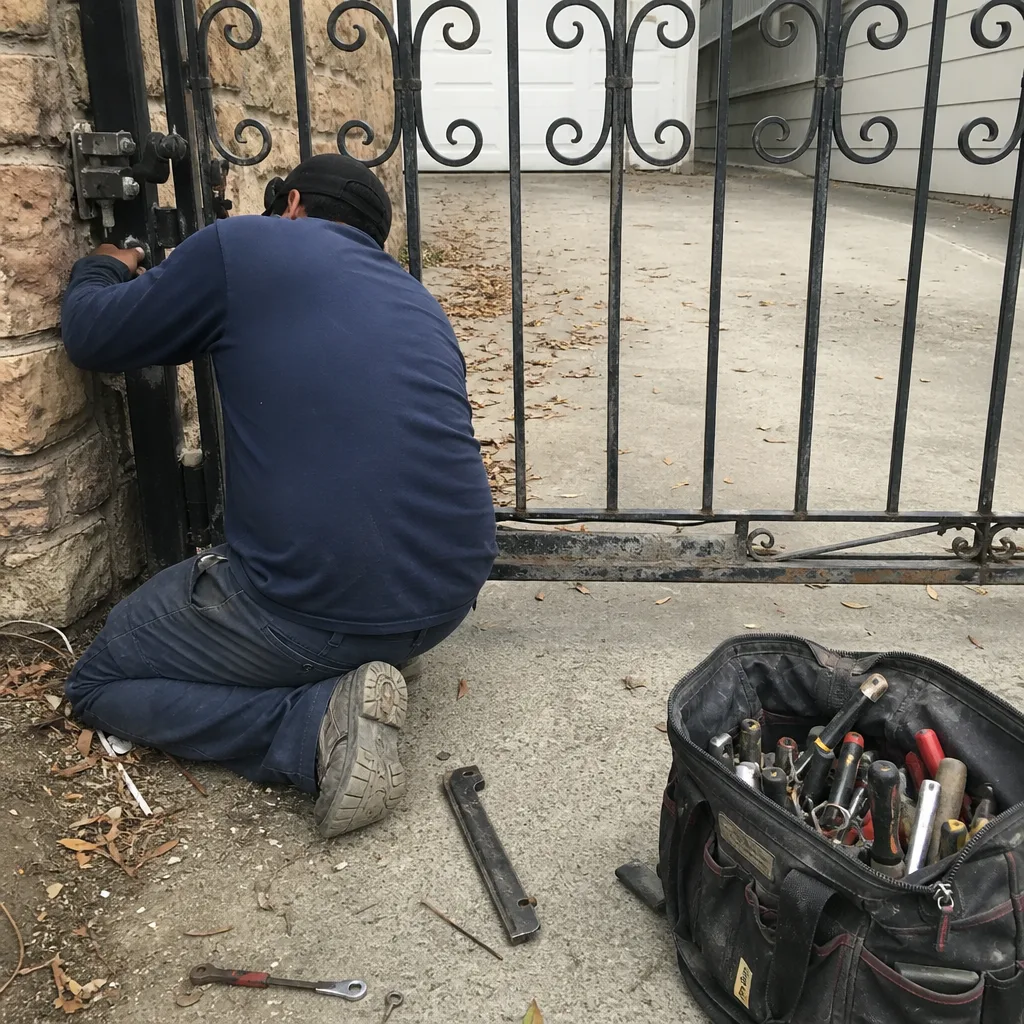 Before
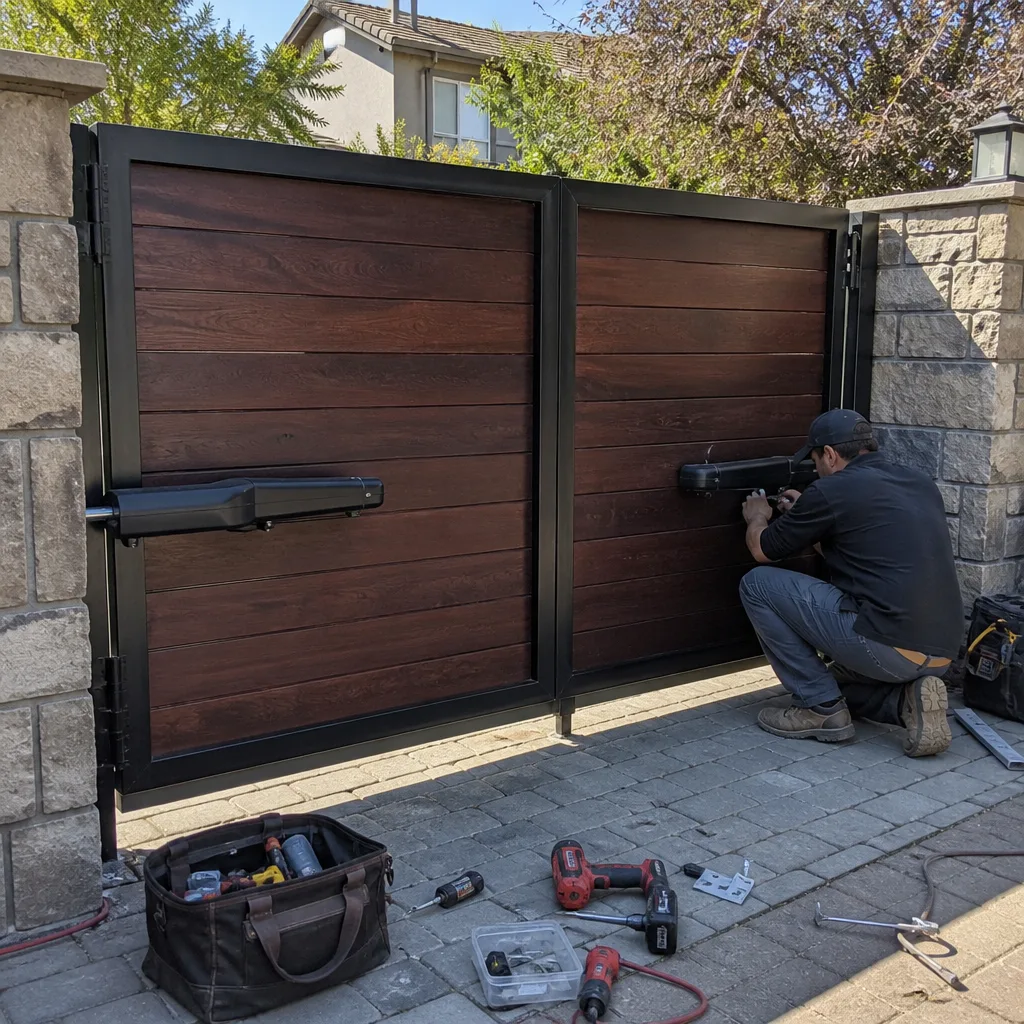 After
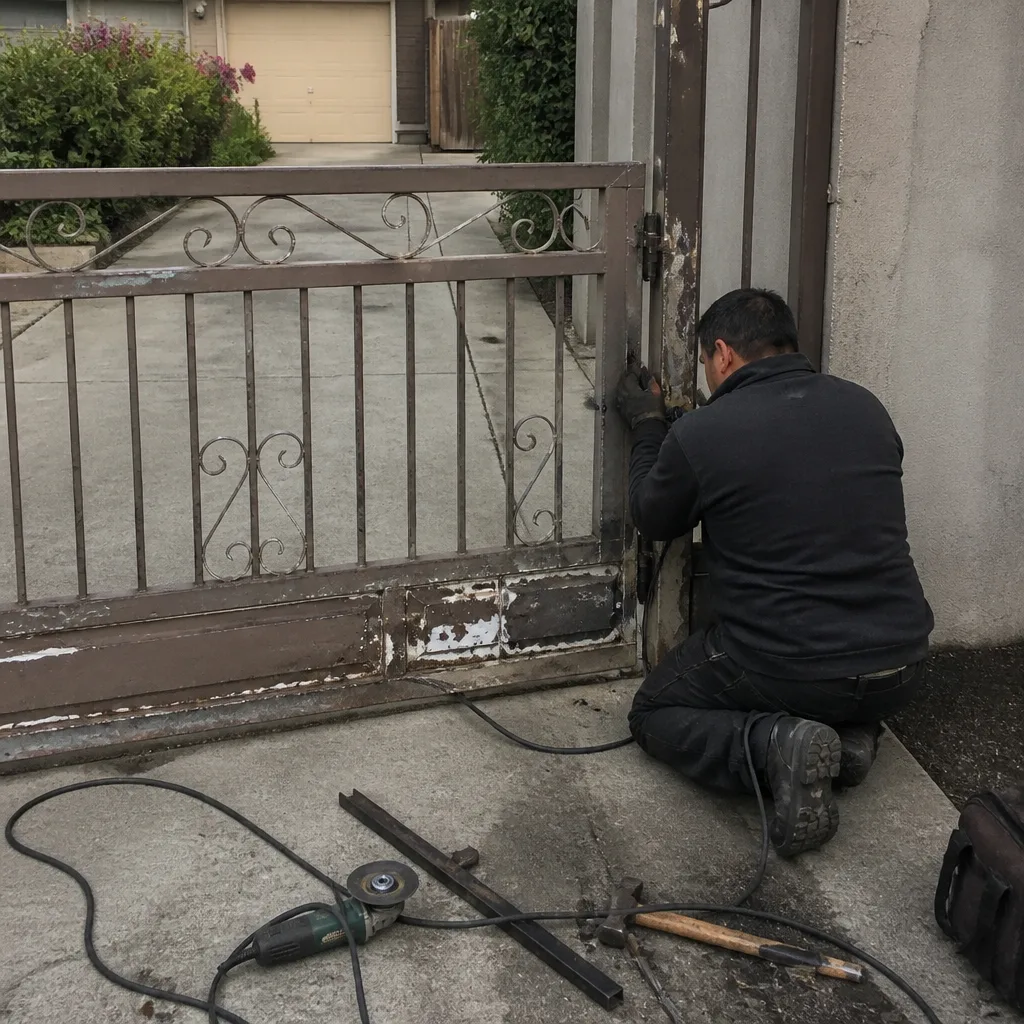 Before
 After
 Before
 After